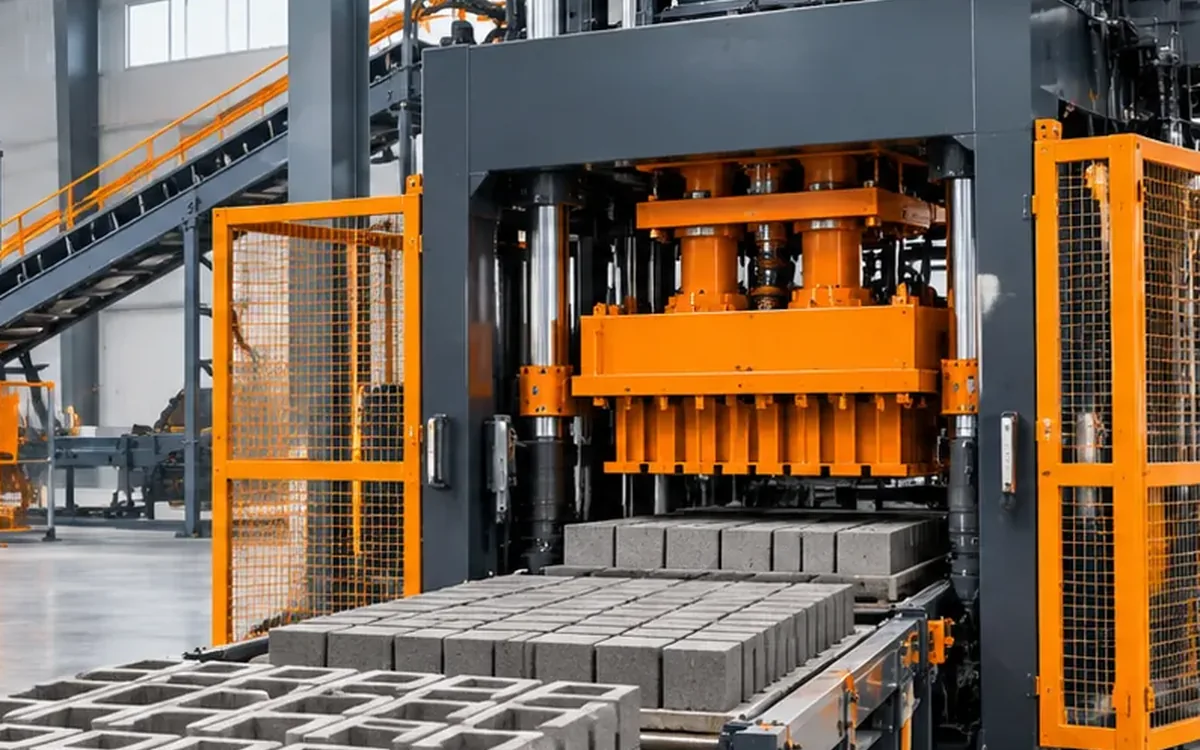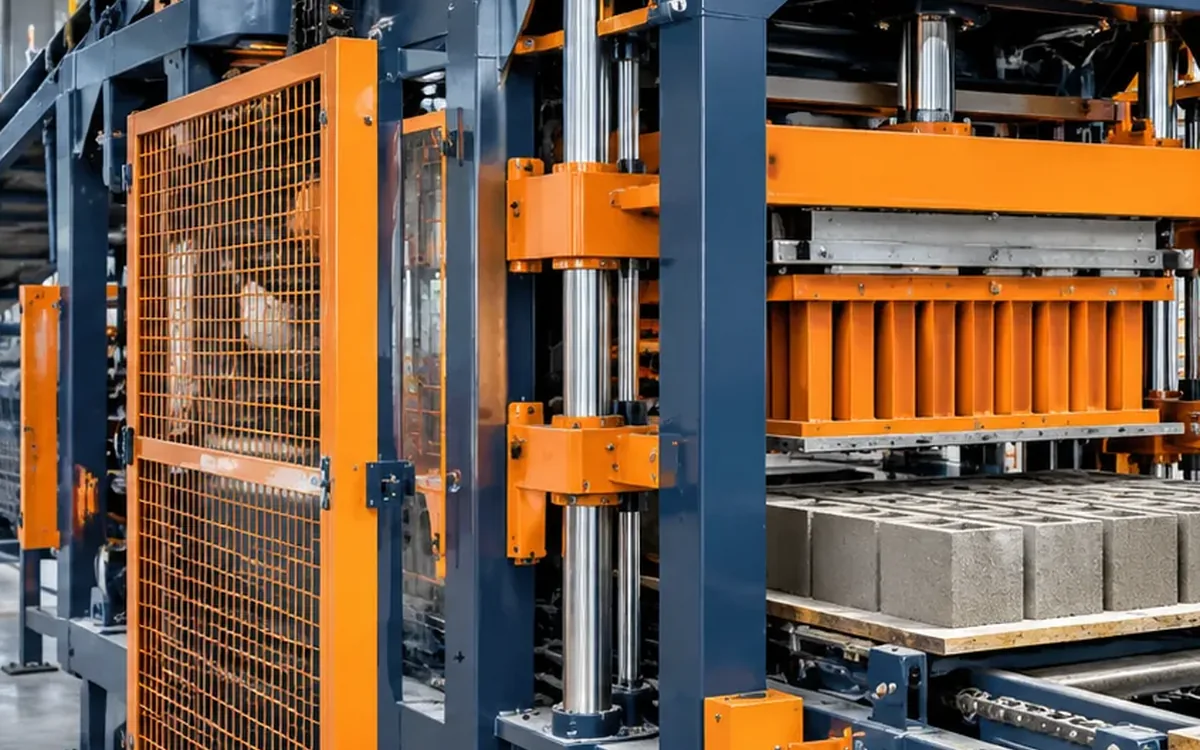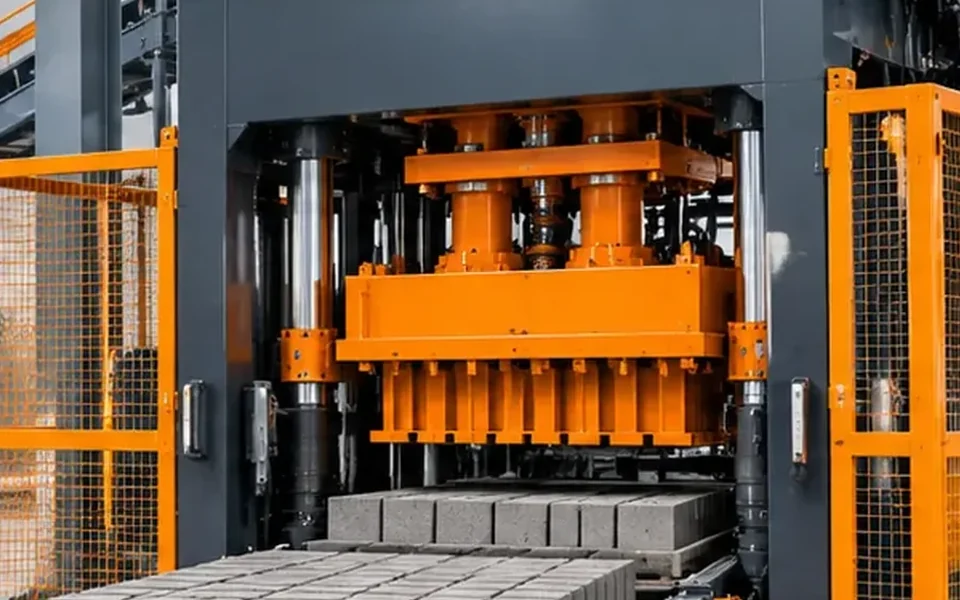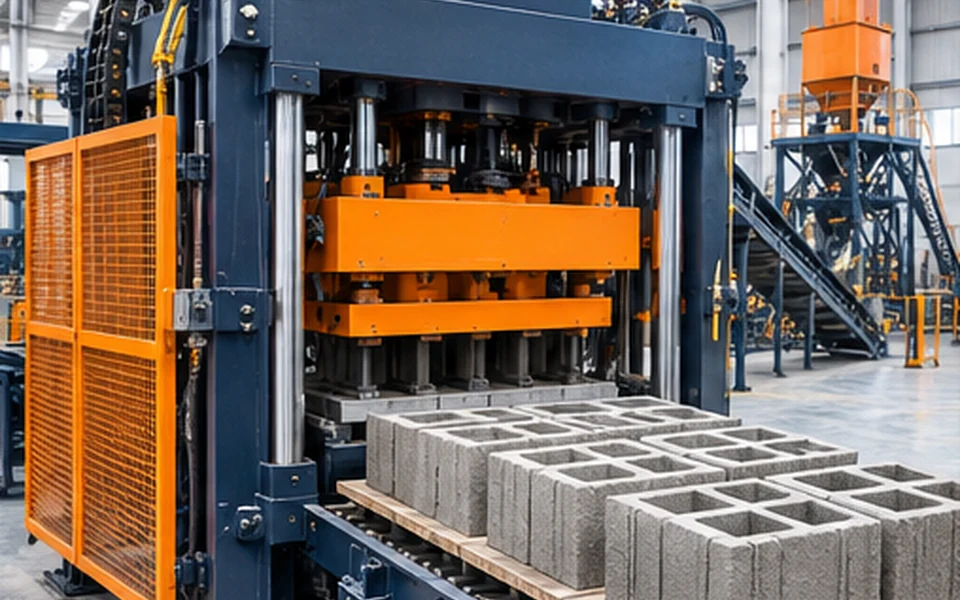
Stationary block production equipment for hollow, solid and architectural concrete masonry units.
Product and machine alignment
A concrete block making machine should be selected around the dimensions, mix design, and commercial demand of the blocks to be produced. The number of cavities in a mould affects potential output, but cycle time, feed consistency and curing logistics determine whether the plant reaches that output over a full shift.
Machine selection also influences the type of pallets, material handling equipment, and operator access required. A compact line may prioritise flexibility and a manageable initial investment, while a multi-shift operation must evaluate stable vibration, fast mould changes and reliable transfers.
What to evaluate before ordering
Start with actual block drawings, including wall thickness, product height and required surface finish. Verify how the block mix will be prepared and transferred, how fresh blocks will be moved without damage, and which quality tests are required in the destination market.
- Reference product dimensions and proposed mould cavity count
- Production pallet specification and changeover approach
- Batching, mixing and moisture control
- Curing method and handling capacity
- Maintenance access and spare-parts requirements
A complete production decision
It is useful to look beyond the press itself. The mixer, pallet circulation, green-product conveyor, curing racks and cubing arrangement must operate at a compatible pace. Our range is structured to help buyers compare these production stages without treating a catalogue cycle-time figure as guaranteed factory output.
Browse the individual machine concepts and discuss your planned product mix before deciding on a particular configuration.
Selecting by masonry unit rather than sales headline
A plant intended for common hollow wall blocks should not be assessed on the same basis as one producing dense solid units, large-format masonry or decorative split-face products. Start from dimensional drawings and the products' intended use, then establish a practical monthly mix. The cavity arrangement, wall thickness and allowable dimensional variation are more informative than a machine class name alone. The forming area must allow enough clearance for each arrangement without creating excessive unsupported pallet area. Ask for representative sample output using the proposed unit geometry. A machine that performs well with one simple rectangular mould may behave differently with narrow webs or deep cores. Selection becomes much more reliable when the commercial product programme is translated into a set of tooling and process requirements before equipment sizes are compared.
Dry-cast concrete responds to how evenly it is distributed and compacted, not merely to the nominal force stated in a brochure. Feed-box travel, access to mould corners, vibration transmission and tamper movement must work together. A hollow unit can show weak internal webs even when its outer appearance looks acceptable; a solid unit may need different feed and consolidation timing. During trials, inspect every cavity rather than selecting the best-looking product from the pallet. Record dimensions, edge integrity, density-related observations and green stability at repeatable operating settings. Ask which machine parameters are recipe-controlled and which remain mechanical adjustments. The goal is a stable manufacturing method across the intended product assortment, with reasonable changeovers and a clear procedure for checking quality.
Understanding shift output and bottleneck ownership
Machine output needs to be expressed with its assumptions: units per mould, actual pallet cycles, working minutes and expected lost time. An eight-hour shift is not automatically eight hours of forming. Cleaning, mould adjustments, inspections, refilling and planned stops reduce net production. In a complete factory, the batching system may be unable to feed the press continuously or the wet-side transfer may wait for empty rack positions. Compare capacity using the same representative block drawings and shift assumptions for every candidate. Separate theoretical moulding potential from saleable cured output. If sales demand changes seasonally, calculate both the regular operating scenario and the peak-period requirement. This avoids buying a press whose surrounding equipment cannot reasonably sustain its advertised pace.
The production pallet ties the press to the conveyor, elevator, curing rack and return route. Check supported width, length, thickness, flatness and loading assumptions. A mould with more cavities may increase output but also increase fresh-product mass and the risk of pallet deflection. Alignment at each transfer point matters because newly formed blocks have limited ability to tolerate vibration and impact. Plan a circulation inventory covering pallets in the machine, transfer sections, curing storage and return queue. Include spare pallets and a defined inspection method for worn or distorted units. When the plant might add other block formats, evaluate whether they remain compatible with the chosen pallet and rack envelope rather than assuming future tooling changes will be simple.
Choosing automation without ignoring operators
Automatic block presses reduce manual interventions when upstream and downstream systems are ready to cooperate. They do not remove the need for trained staff, planned maintenance or clear quality checks. Consider who will prepare mixes, change moulds, supervise forming recipes, manage rejected pallets and release finished stock. For a smaller plant, an operator-assisted arrangement may match its duty better than an extensive automated line that rarely runs near design capacity. For a multi-shift facility, coordinated pallet transport and fault diagnostics may be essential. Examine recovery from missing pallets, blocked conveyors and interrupted forming cycles. Safe manual modes, clear HMI messages and maintainable guarding can matter as much as nominal automation level in achieving reliable everyday output.
The factory acceptance programme should reflect the product range rather than a one-minute demonstration. Select a representative hollow unit, a solid product if required and a demanding geometry with thin sections or detailed edges. Measure products from different mould positions, repeat the run after a controlled stop and record the time required for a normal product change. Check whether the proposal explains who provides the mould, reference mix, curing conditions and dimensional test instruments. Early fresh-product appearance is only one stage of acceptance; later strength and durability evaluations depend on curing and applicable market requirements. Agree on a recorded action list for defects, equipment adjustments and training issues. An objective trial protects both buyer and supplier from vague promises.
Factory utilities and practical installation boundaries
A machine purchase should include a layout drawing that shows service clearances, electrical cabinets, hydraulic access and the feed route from the mixer. Ask for connected and operating load information rather than inferring electrical demand from the largest motor rating. Site supply voltage, frequency, dust control, drainage and available building height should be established before the equipment layout is frozen. Forklift and pedestrian access should not cross a moving pallet line without a planned safety arrangement. If the block press joins an existing plant, confirm interfaces with current conveyors, batching controls and production pallets. Clarify installation supervision, operator training, spare parts and documentation within the supply boundary. This is often where apparently similar machines differ in their real installed cost.
Prepare a concise technical brief with at least two product drawings, target daily quantities, proposed shift pattern, preferred automation, plant dimensions and utility information. List equipment already owned and identify whether the offer must include moulds, batching, wet-side handling, curing and cubing. Provide the expected aggregate types and any planned face-finish or colour options because these can change material preparation and cleaning requirements. A good response should distinguish the press specification from the complete production-line scope. Compare offers through equipment boundaries, acceptance conditions, training and service arrangements instead of price and claimed hourly output alone. Review the industrial automatic block machine and the complete block production line for more focused planning considerations.