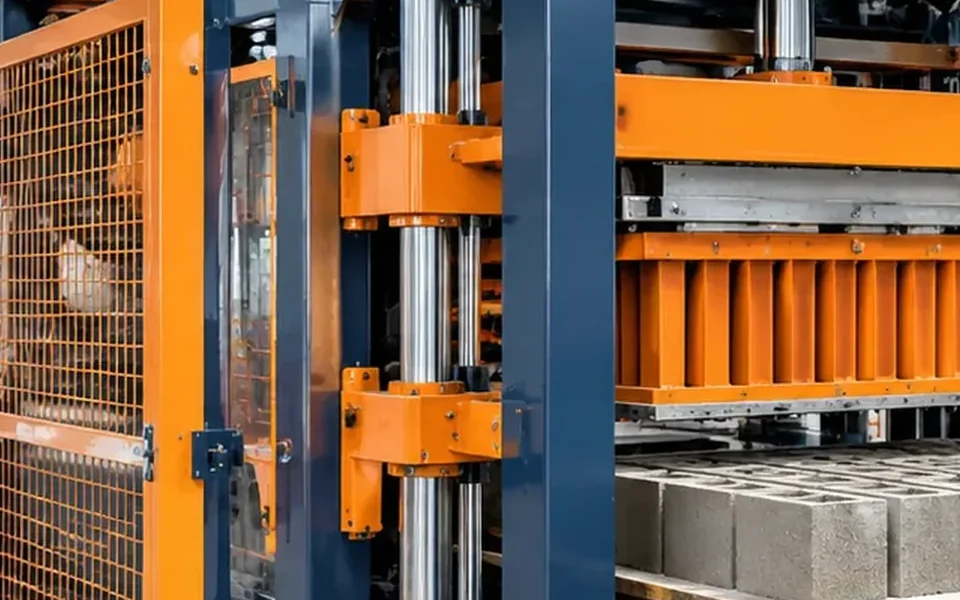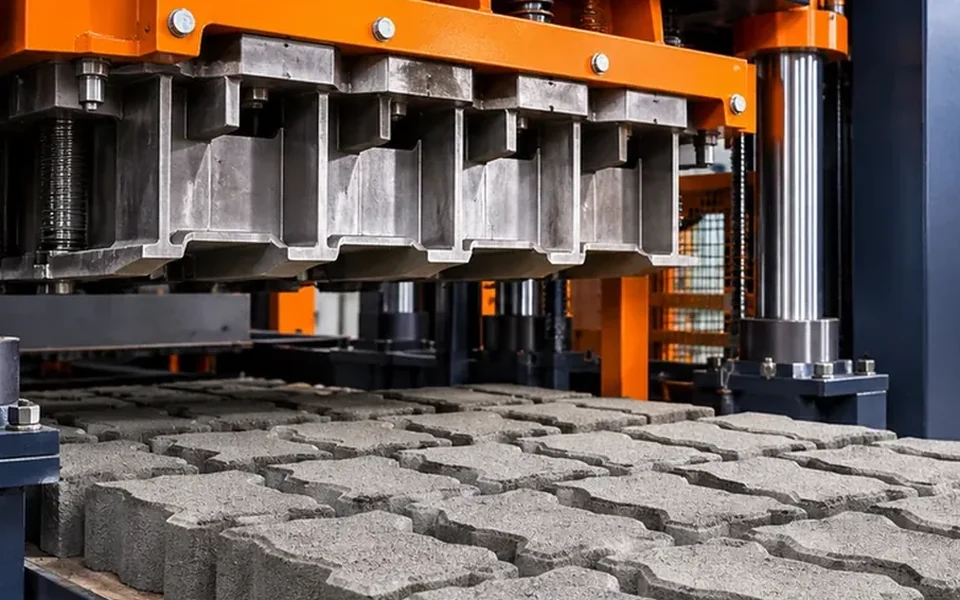
Support components and planning practices for practical machine uptime and plant serviceability.
Design for practical maintenance
Block production equipment operates around vibration, abrasive materials, repeated cleaning and regular mould changes. Maintenance requirements should be considered before installation, with safe working space around bearings, hydraulic components, electrical cabinets and transfer mechanisms.
A spare-parts plan should distinguish wear items that need routine stocking from specialist components that must be sourced ahead of a planned shutdown.
Daily and planned checks
Define operator checks for unusual sound, contamination, lubrication, loose connections, pallet travel and hydraulic leakage. Keep a maintenance record that links failures to operating conditions rather than relying on emergency repairs alone.
- Lubrication points and intervals
- Hydraulic filtration and cleanliness
- Fasteners and vibration-system inspection
- Sensor and electrical connector checks
- Replacement parts and technical documentation
Long-term ownership cost
Evaluating a machine should include availability of service information, accessibility of components and the likely cost of interruptions. Planned spare-parts purchases can be modest compared with prolonged stoppage of a complete production line.
Rank failure risk by its effect on production
A block plant contains wear components, electrical devices, hydraulic assemblies, bearings, belts and mould tooling whose failures have different operational consequences. Do not build a spare-parts list by copying every component from a catalogue. Identify equipment that stops the entire production route if it fails, and distinguish those items from parts that can be replaced during planned service. Consider lead times, site location and the ability of local technicians to perform repairs safely. A mixer discharge gate fault may stop all forming, while a worn mould edge may cause quality losses before an obvious mechanical failure. A criticality review should take both lost production and product rejection into account. Use operating evidence to revise the ranking after the plant starts rather than treating the first list as permanent.
Vibration, cement dust, abrasive aggregates and repeated cleaning create wear patterns that differ by machine and product. Inspection intervals should be based on duty, material type and observed condition rather than an arbitrary universal service number. Establish measured or visual acceptance points for mould cavities, tamper surfaces, mixer tools, conveyor rollers and pallet alignment. Record what was found, which adjustment was made and whether the component remained safe to operate. Photographs and dimensional measurements can help identify deterioration that develops slowly. Operators should understand which signs require a controlled stop and which can be scheduled for the next maintenance window. A concise, consistent inspection log is more useful than a large set of checkboxes that nobody completes meaningfully.
Hydraulics, lubrication and contamination control
Hydraulic systems depend on fluid condition, correct filtration, temperature control and secure hose routing. Establish safe access to filters, seals and service points without exposing technicians to uncontrolled pressure or unexpected machine movement. Lubrication plans should identify the correct points and methods for bearings, guides and moving assemblies, including those exposed to aggregate fines. Contamination entering a hydraulic unit or gearbox can create damage that is expensive to diagnose later. Ask which maintenance tasks can be completed while adjacent equipment remains operating and which require full isolation. Hoses and cables should be routed away from abrasion, pinch points and accumulated material. A plant layout that supports inspection and clean service work reduces the temptation to postpone preventive maintenance.
Not every costly maintenance issue causes a machine to stop. Worn tooling can produce progressively poor corners, inconsistent thickness and greater rejection while the press continues cycling. Bent or damaged production pallets may change forming geometry and disrupt transfer alignment. Include product dimensions and visual quality in routine condition monitoring, and connect unusual defect patterns to specific mould cavities or pallet identifiers where practical. Design a process for removing damaged pallets from the circulation loop without stopping all handling operations. Track mould repairs and replacement cores against the products they support. Quality-related maintenance can protect saleable output just as effectively as emergency repair work, especially when several product formats share one machine.
Plan downtime and maintenance access
Create an operating calendar that includes mould changes, normal production cleaning, larger planned shutdowns and inspections of equipment that cannot be reached during operation. Coordination is important because the press, batching system and curing racks may need different maintenance windows. A plant with heavy tooling requires lifting equipment, stable staging areas and space to work without crossing forklift routes. During design review, check whether hydraulic units, motor drives, sensors and mixer internals can be accessed without major dismantling. Document safe lockout and isolation procedures consistent with the site's legal and machinery requirements. Effective preventive work is difficult when service points were hidden behind permanent structures to save a small amount of installation space.
Stock planning should reflect component criticality, reasonable failure modes and actual procurement lead times. Fast-moving items such as selected sensors, seals, filters and wear components may be good local stock candidates, whereas expensive assemblies may need a supplier support arrangement instead. Confirm part identification, revision compatibility and storage conditions so stocked components are usable when needed. Electronic devices can become obsolete; ask about restoration of controller programmes and software licensing before relying on a shelf spare. Include consumables used during normal servicing and the tools necessary to fit replacement parts safely. Inventory should be periodically reviewed against actual incidents and supplier lead-time changes rather than increased without evidence. The objective is reliable repair capability, not the largest possible storeroom.
Turn fault history into improvement actions
When a production line stops, record the original cause, affected machine, time to diagnose, time to repair and whether production restarted normally. Separate recurring sensor problems from material shortages, tooling changes and operator delays so maintenance effort targets the real bottleneck. Repeated short stops may have greater cumulative effect than a rare large breakdown. Review rejected products alongside machine faults, since poor mixing or mould wear may produce losses without triggering an alarm. Maintenance meetings should produce assigned corrective actions such as relocating a sensor, changing cleaning practice or stocking a specific part. After each change, check whether the failure pattern actually improved. A simple, trustworthy record often supports better decisions than complicated reports built on inconsistent data.
Ask for an equipment-specific spare-parts recommendation, the location of service points, component documentation and training requirements. Clarify who provides technical advice, how software backups are supplied and what can be repaired by the plant's own staff. For imported equipment, delivery times and the availability of compatible local parts may affect the economic case. Review support responsibilities for machines installed by different providers within one line. The hollow block mould assembly illustrates tooling wear risks, while PLC line control shows why backups and troubleshooting access matter. Include maintenance provisions in the factory layout before construction makes service access difficult. These issues are best resolved in the quotation stage rather than after the first extended stoppage.