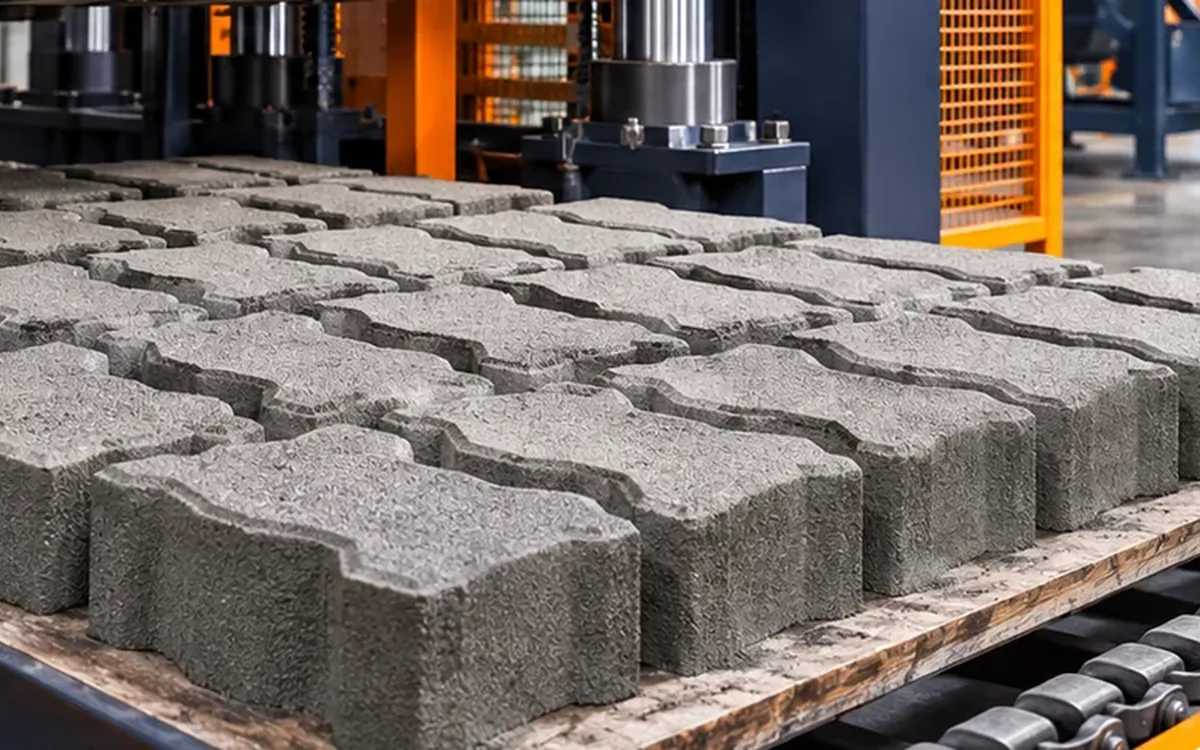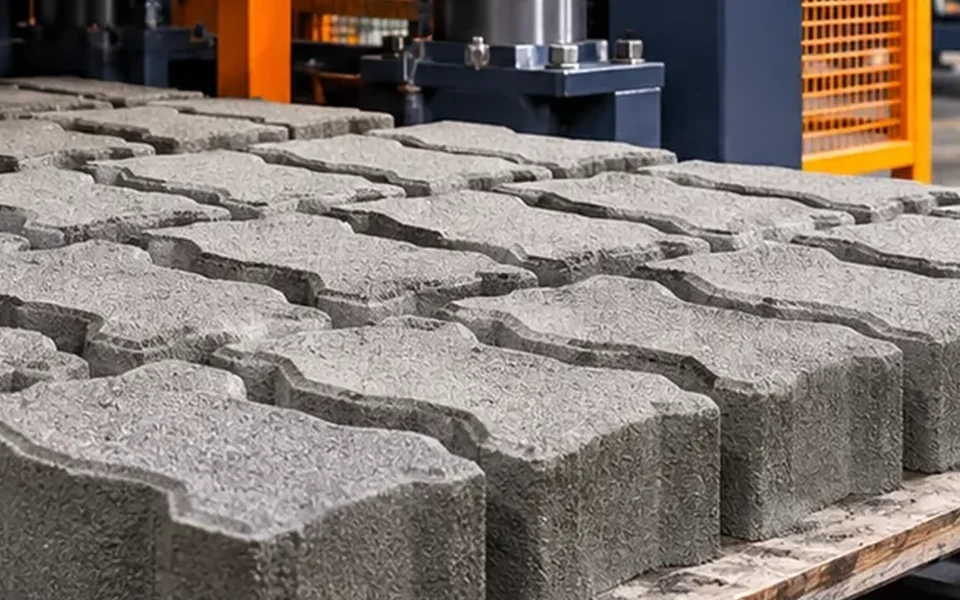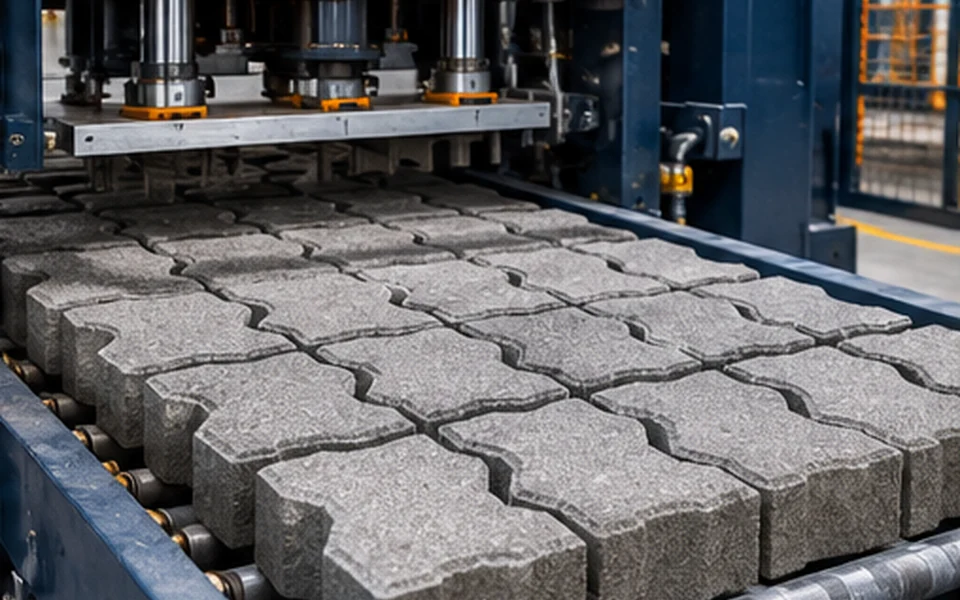
Equipment configurations for interlocking pavers, landscaping slabs and multi-format paving products.
Paving performance depends on the full process
Interlocking pavers are produced to dimensional and appearance expectations that differ from those of ordinary wall blocks. Consistent filling, vibration and compaction, accurate moulds and handling that preserves the fresh surface are all essential.
A paving machine can serve multiple patterns, but every mould combination should be checked against its pallet size, product height, feed arrangement and target throughput.
Single-layer and face-mix options
Where the project calls for decorative surfaces, a second material feed or colour process may be part of the specification. This should be addressed while planning the press, not left as a late accessory. Surface treatment equipment can also influence material flow and curing time.
- Interlocking and rectangular paver formats
- Optional face-mix or colour dosing
- Pallet handling without surface marking
- Measurement and sampling of finished product
Production-line priorities
Paver area per shift is best estimated from real piece size, pieces per pallet, cycle count and operating efficiency. It should be reviewed together with packaging format and yard logistics. A line that forms pavers rapidly but cannot cure and stack them effectively is still constrained by downstream operations.
Start from paving formats, thicknesses and finishes
Interlocking pavers, straight-edged rectangular stones and larger landscape slabs have different requirements even when made with a similar vibro-press process. The intended product drawing controls mould cavity arrangement, edge definition, forming depth and pallet loading. Surface appearance becomes especially important when customers compare the finished paving area rather than individual units. Define the colours, textures, thicknesses and installation patterns to be sold in the first year. Decide whether the factory will produce only a structural base mix or also a decorative face layer. These choices affect mixer provision, material handling and cleaning. A machine should be evaluated against the full commercial assortment, including products that are harder to fill or release, not only against a simple standard paver.
Two-layer paving can require separate material preparation, metered face-mix delivery and coordinated mould filling before final compaction. Consistent colour depends on pigment dosing, aggregate moisture, batch size, material carryover and the time between batching and forming. Ask how the proposed system limits colour contamination during a product change and what cleaning routine is practical between batches. For premium architectural paving, uncontrolled face-layer thickness can become a visible quality issue after laying. Examine the proposed feeder distribution and programme settings using samples from several pallet positions. Document acceptable variation in shade, geometry and surface texture under representative operating conditions. A good concept should make frequent small product runs feasible without sacrificing repeatability.
Dimensional accuracy across connected paving
Pavers are installed in patterns that magnify differences between adjacent units. Edge condition, face flatness and product thickness therefore deserve attention throughout mould maintenance and compaction trials. A product may leave the press looking acceptable but show chipped corners after wet-side transfer or irregular alignment after curing. Inspect complete pallet layers and sample units from different cavities, not isolated pieces. Consider whether the proposed handling equipment supports the chosen paver profile without scuffing its decorative surface. Where installation calls for multiple shapes in one pattern, the mould programme must produce compatible dimensions with a planned inspection routine. Checking the complete installed-product logic is more valuable than relying on a single nominal tolerance claim.
Paving plants are often compared using pieces per shift even though sales and installation are commonly planned in square metres. Translate each mould output into square metres per pallet and then apply the realistic cycle rate, operating time and reject assumptions. Record the number of mould changes during a normal week, colour-change cleaning and any surface-finishing operation. A high-output press may offer little overall advantage when the curing system or pallet stock is sized for a smaller routine. Establish separate calculations for small interlocking pavers and larger slabs because product mass and pallet occupancy differ. A useful investment estimate ties the expected saleable area to curing duration, finishing and storage rather than treating forming output as finished stock.
Handling soft surfaces without marking the product
Fresh paving products need a smooth route from the press into controlled curing. Sudden starts, misaligned rollers and unstable pallets can damage surface edges before the mix has gained adequate strength. Follow the wet side all the way into the rack or chamber and verify the available spaces for peak output. After curing, dry-side lowerators, cubing equipment and any face-finishing machinery should handle the specified dimensions without abrasion. Packaging arrangements must account for surface protection where colours and textures matter commercially. Investigate the first point at which defects appear: inconsistent forming, rough transfer, insufficient curing and unsuitable gripping can leave visually similar damage. The line layout should make these causes distinguishable during commissioning.
A multi-pattern paving business will handle more tooling variation than a factory that makes one hollow block. Ask how mould positioning is checked, where tooling is stored and what lifting aids are required for safe exchange. Worn edges or damaged tamper plates can affect the dimensional match between pavers and create visible differences in a finished surface. A sensible mould register identifies each product drawing, machine recipe, service history and inspection measurements. Include time for cleaning after pigment use and for testing the first pallets after every change. The business case should account for tooling inventory and changeover labour as well as purchase price. This makes capacity planning honest when decorative variations are part of the selling proposition.
Mix preparation for paving quality
The grading of aggregates and the moisture condition of sand influence both compaction and appearance. Ask how the batching system corrects for material moisture and how the mixer provides uniform distribution of cement, water and pigment. For face-mix operation, separate colour handling and metering arrangements may be needed. Evaluate discharge time and the period for which the prepared low-slump concrete waits before entering the feeder. Material left standing can behave differently from a fresh batch, even without a recipe change. A trial plan should record raw-material conditions and recipe settings so that successful sample production can be reproduced. Use local material testing to establish a suitable mix rather than relying on an assumed universal recipe supplied with a machine.
Provide the paver profiles, required thicknesses, intended patterns, target area per shift and whether single- or double-layer products are planned. Add colour requirements, sample finish references and the packaging format expected by distributors or installers. State how frequently the product range changes and whether a plant already has usable batching, curing or cubing equipment. Ask suppliers to identify which proposed equipment manages face mix, pigment, mould changes and dry-side stacking. Confirm demonstration conditions for appearance and dimensional quality. The automatic interlocking paver machine page covers forming considerations, while the automatic paver line follows the complete factory process.