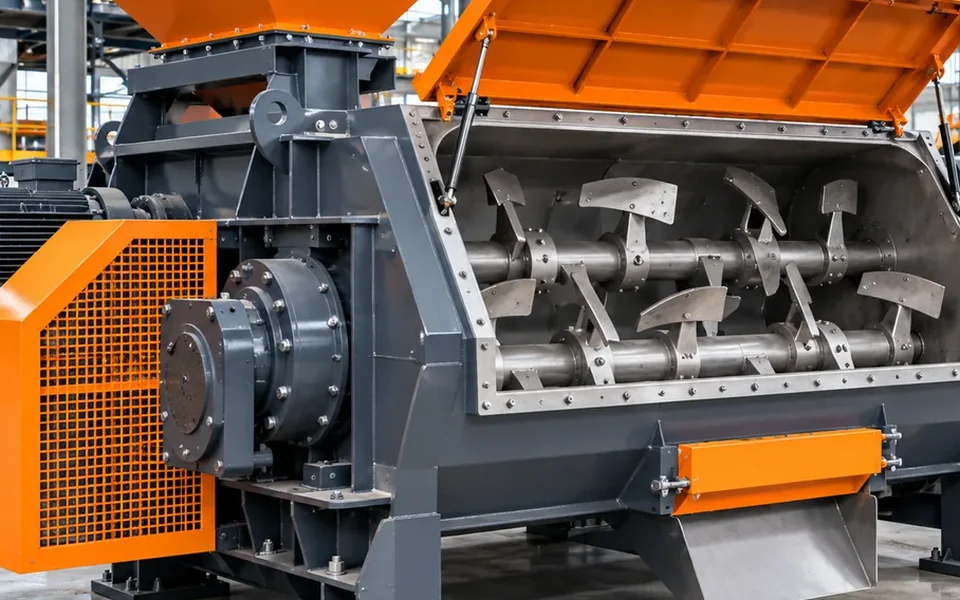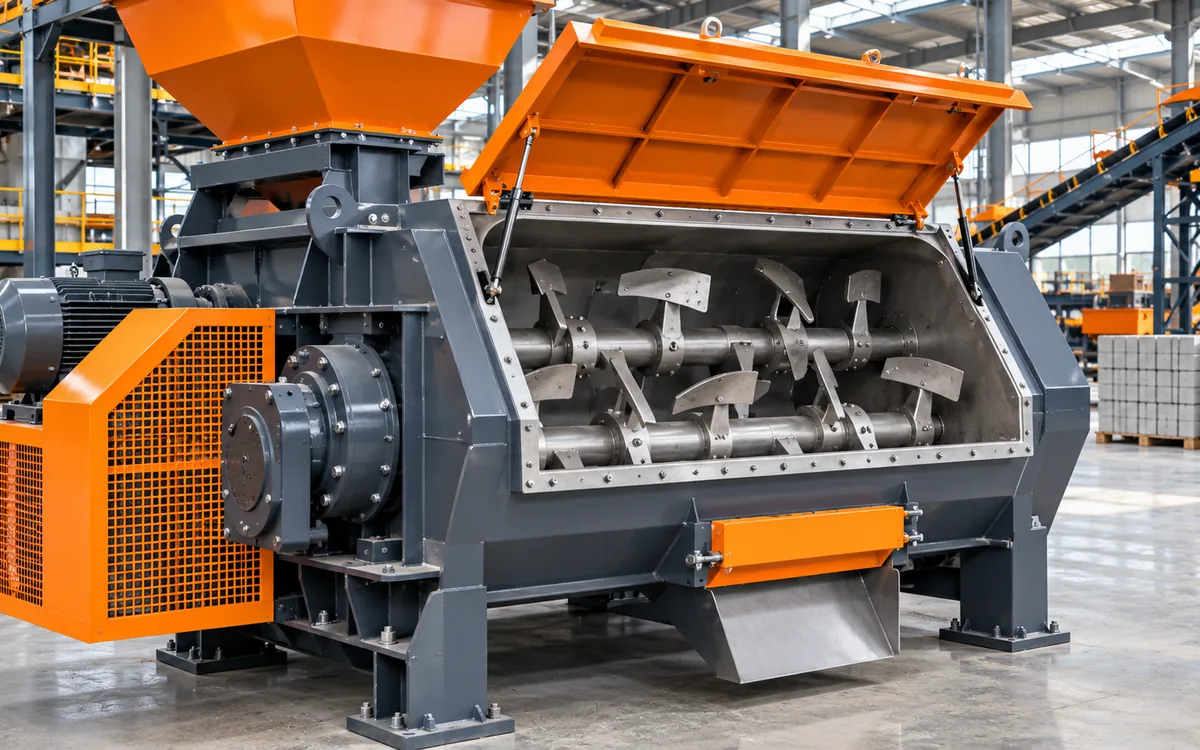
Aggregate batching, cement and water dosing, and mixing equipment for vibro-pressed concrete products.
Why material preparation matters
Stable block and paver production starts before the press. Aggregate grading, measured cement and water, mixing energy and transfer time affect how the concrete fills a mould and responds to vibration.
Even a high-capacity press cannot compensate consistently for a batch whose moisture or composition changes between cycles. Plant design should therefore treat the mixer and weighing arrangement as core production equipment.
Selecting the mixing concept
Assess batch size against press demand and the actual number of shifts. Choose a mixer with appropriate material access, discharge method, maintenance space and control integration. Moisture management and cleaning procedures must also be planned at the start.
- Aggregate storage and grading
- Cement and water weighing
- Mixer batch and discharge cycle
- Transport to the block machine
- Cleaning and operator safety
Integration with the forming cycle
The batching system should deliver concrete to the forming equipment with predictable timing. Excessive waiting, segregation during transfer and inconsistent feed volumes can reduce both product quality and plant availability.
Separate recipe precision from nominal plant capacity
An aggregate bin, cement scale and mixer can each have an impressive capacity on paper while the combined line still struggles to produce consistent low-slump concrete. Start from the intended product mix, batch quantities and the regular operating cycle of the block press. Identify how many distinct aggregates must be stored and whether colour, face mix or special additives will be used. Specify the practical discharged volume of the mixer instead of treating its total vessel volume as saleable batch size. Review the weighing sequence and how material moves from storage into the mixer. A technically useful concept defines the timing and accuracy of each stage and the volume of material that can be delivered before the forming system needs another batch.
Consistent block production relies on a repeatable aggregate blend. Different sizes or sand sources should be stored so loading equipment does not mix them accidentally. The bunker layout needs enough access for delivery vehicles while minimizing contamination from yard dirt or standing water. The plant should be able to inspect stockpiles and detect changes in grading that could affect mould filling and green strength. Consider how moisture enters the material during rain or washing and whether covered storage is justified. Material bridging, poor bin discharge or uneven belt loading can change the actual proportions even when the weighing controls appear correct. The physical arrangement of the bins and conveyors therefore influences product quality before the mixer has started.
Moisture compensation in dry-cast concrete
The correct amount of added water depends on how much water is already carried by the aggregates, particularly fine sand. A recipe that succeeds with one stockpile may become too wet or too dry after weather changes. Establish a practical method for moisture measurement, correction and operator verification. Where automatic sensors are proposed, ask how they are calibrated and how their readings influence the dosing routine. Check that the mixer provides enough time for uniform distribution without allowing material to stand unnecessarily before forming. Overly wet low-slump concrete can produce soft green units or inconsistent demoulding, while overly dry material may leave poorly filled corners. Record raw-material condition alongside the batch recipe during acceptance trials.
Different mixer arrangements may produce satisfactory concrete, but their performance should be evaluated for the aggregate blend, consistency and working batch size required. Planetary mixing can be considered where uniform blending and recipe flexibility are important, yet the choice still depends on material flow, discharge arrangement and cleaning requirements. Ask whether additions such as pigment or admixtures are introduced at a controllable point. Inspect the mixing tools, lining wear areas and discharge gate for service accessibility. The time to fill, mix and empty the machine must fit the press feeding schedule. Compare a full operating cycle using the actual proposed mixture rather than comparing motor power or nominal vessel size in isolation. A practical trial includes consistency checks from more than one discharged portion.
Maintaining a steady supply to the forming station
The block press may consume concrete in short, repeated portions while the mixer operates in batches. The connection between those rhythms needs careful design. A receiving hopper or transfer conveyor should limit segregation and prevent unwanted material buildup. Determine how long mixed material will remain before forming, especially when small batches or frequent colour changes are planned. The controls should avoid preparing another full batch when the downstream feed is blocked. Consider what happens if the mixer discharges while the press is stopped or if a sensor gives an incorrect ready signal. A clear interface design protects product consistency and reduces avoidable waste. It also makes commissioning easier because the responsibilities of the batching and forming equipment can be tested separately.
Cement fines and dry aggregates create housekeeping challenges that can affect weighing equipment, sensors and operator access. The batching arrangement should provide reasonable dust capture and safe inspection points according to local requirements. Loading and maintenance routes need to remain clear of unguarded belts, moving gates and elevated access. Establish a cleaning method for mixer blades, moisture sensors, scales and discharge paths without introducing unsafe manual intervention. Accumulated hardened material can change usable volume and impede correct discharge. Water management should also be considered because uncontrolled washout may affect yard drainage or later mixing. A maintainable layout reduces the tendency to bypass safeguards during busy shifts and supports more accurate measurements over the equipment's service life.
What batching acceptance should actually demonstrate
A commissioning programme should check aggregate selection, measured batch quantities, mixer cycle times and the coordination with the block press. Record the ingredient conditions used during testing, including aggregate moisture and grading where practical. Verify scale operation and the planned calibration process rather than accepting an untested display value. Follow several consecutive batches into the forming operation and inspect products for visible variation between cycles. Test a normal stoppage with the next batch pending, then observe how the system resumes without creating a material surge. Documentation should define recipe access, adjustment authority, preventive maintenance and spare wear components. The target is a repeatable supply of suitable concrete under representative production conditions, not a headline maximum tonnage.
Provide the intended block and paver range, target shifts, aggregate sources, number of fractions, cement supply method and anticipated recipe changes. State whether material storage, conveyors, silos, compressors, water dosing and controls are already available. Ask each supplier to show the scope from material arrival to the press feed point and identify excluded civil works or utility connections. Request a control interface description for equipment delivered by others. Consider the planetary mixer and aggregate batching unit together; the integrated batching and forming line explains how this part of the plant connects with the press.