
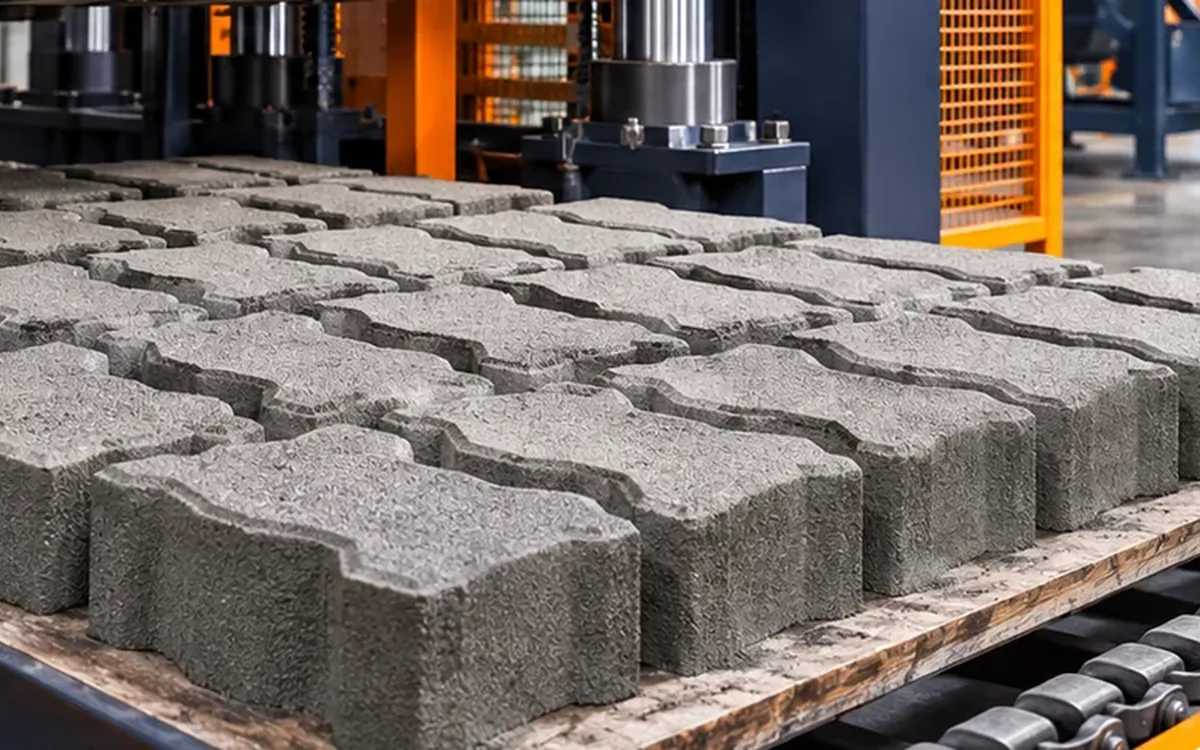
A Ghana paving-products project should begin with the finished hardscape range, not with the press model. Interlocking units, slabs and kerbstones create different demands on moulds, layer handling, curing positions and transport. A producer planning both everyday grey paving and decorative colour work needs to consider whether the additional complexity will be supported by predictable order volumes. Establish the sales mix and a realistic dispatch pattern before setting an automation target.
Match equipment to intended paver geometry
Record thickness, edge profile, surface texture and expected use for each proposed unit. Confirm that the press and pallet arrangement can accommodate the largest mould without compromising the smaller products. Review how the plant will handle fragile edges immediately after forming. A trial with one standard rectangular paver is not sufficient evidence for a portfolio that includes larger slabs or detailed interlocking shapes.
Prepare for visual consistency as conditions change
Aggregate moisture and cement colour can affect the appearance of decorative units, while uneven feed can make one cavity look different from another. Retain physical colour references and specify the age at which comparisons are made. If the site will use a separate face mix, plan mixer capacity and cleaning access alongside the feed system. A controlled test programme is more reliable than correcting shade by eye during a busy shift.
Integrate handling with curing conditions
Sketch every pallet movement from the press to curing and back to the forming station. The arrangement should avoid queue conflicts between fresh products and the empty pallet return route. Verify how storage conditions influence product performance and when units can be safely cubed. If an outdoor yard is involved, examine rain exposure, floor drainage and the distance to finished-stock storage rather than assuming the layout in a supplier brochure will transfer unchanged.
Define packaging around the delivery channel
Landscape merchants, project contractors and direct customers may accept different pack sizes and protective measures. Establish how units will be labelled, strapped and lifted, and how delivery vehicles will approach the stock. Packaging material affects cost, but damaged surfaces and unstable loads can create greater losses. Test representative finished packs with the actual loading equipment planned for the facility.
Demand evidence of the full line's capabilities
Ask each supplier to separate forming, face-mix preparation, curing, cubing and packing in the scope of supply. Request reference settings and witnessed product trials for the most commercially important paver types. Include operator instruction and spares for both wet-side and dry-side equipment. See production-line options, paver quality control and the enquiry form when preparing the Ghana investment specification.