
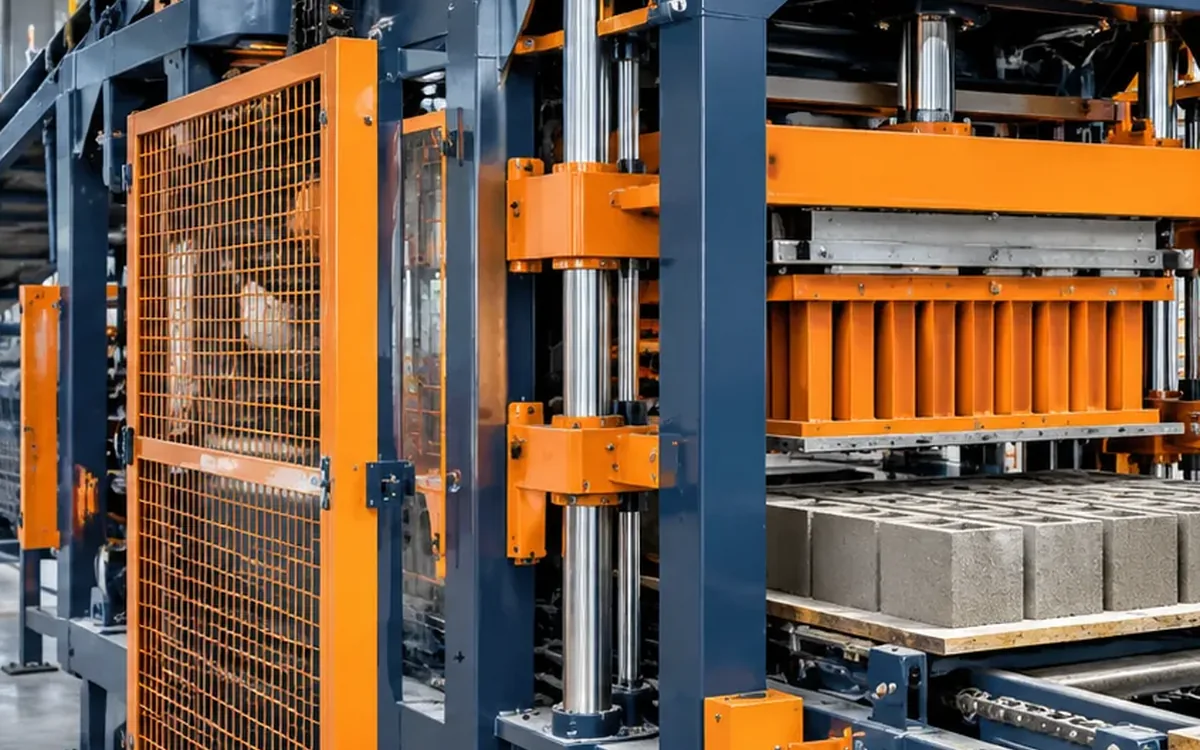
PLC control, machine integration and production monitoring for industrial concrete block factories.
Automation must serve the process
Useful automation coordinates dosing, mixing, moulding, pallet transfers, curing and cubing around a clear production sequence. It helps operators see equipment states and alarms, but it should not hide the physical causes of a process problem.
The suitable automation level depends on shift plans, labour, product changes and local maintenance resources. More functions are not automatically better if the plant cannot maintain them reliably.
Controls to specify
Confirm the scope of interlocks, emergency stops, recipe parameters, operating screens, fault logs and recovery procedures. Each supplier interface should be understood before installation to avoid an isolated control cabinet that cannot communicate with downstream equipment.
- PLC and HMI functional scope
- Recipe and mould changeover settings
- Safety and interlock strategy
- Diagnostics and fault history
- Maintenance access and backups
Maintainability first
An efficient control system allows operators to isolate faults safely and get the line running again through defined procedures. It also supports gradual expansion when the plant later adds handling or finishing equipment.
Describe a production sequence before a PLC architecture
A block plant contains equipment with different operating rhythms, from batch preparation to the press, wet-side transfer, curing and finished-product handling. The control system should reflect the true process sequence and the conditions that make each movement safe. Begin with an interface schedule showing what each machine sends and expects before the next stage can begin. A conveyor cannot continue feeding when the receiving station is full, and a mixer should not discharge into a blocked hopper. Control quality depends on these relationships, not on the visual attractiveness of the operator screen. Establish which supplier owns each signal and interlock when the line contains equipment from different sources. The resulting state diagram should support commissioning, fault diagnosis and later expansion.
A single-shift factory with a modest assortment may not need the same central coordination as a multi-shift line with automated curing and cubing. Establish which tasks currently consume labour, where stoppages arise and which interventions are likely to remain manual. Consider mould changes, quality sampling, maintenance and exceptional product handling before promising unattended running. Some functions may remain operator-assisted while the press and pallet transport follow defined automatic sequences. A good upgrade path describes which sensors, control cabinets and interface provisions are included now and what would need modification later. Avoid treating automation as an all-or-nothing marketing label. Clear responsibility for routine operating decisions often provides more value than installing additional controls that operators cannot maintain or diagnose.
Recipes, access rights and traceability
Different hollow blocks, pavers and kerbstones need different forming conditions and sometimes different concrete recipes. The operator interface should identify the selected product clearly and protect critical settings from casual alteration. Keep a record of programme revisions and changes to important parameters so quality investigations can trace what happened during production. When the line supports face-mix paving, separate material and colour operations may require additional recipe control. Ask how recipe data is backed up and how it can be restored after component replacement. Interface labels should display useful engineering units and the status of required equipment. A production recipe is not merely a saved number: it is the link between the material, tooling, forming system and inspection plan.
An operator should be able to identify the first cause of a stoppage, rather than receiving an undifferentiated alarm after several machines have stopped. Group events by station and distinguish faults from normal waiting states. A missing pallet, delayed mixer discharge and blocked cubing station need different recovery actions. The control design should bring equipment to known positions before any restart and prevent unsafe overrides. Test faults intentionally during acceptance, including lost sensor state, communication interruption and a controlled emergency stop where appropriate. A useful system records the sequence of events so technicians can investigate recurring problems without guessing. Safety functions must be validated separately under the applicable machine and site requirements; an HMI warning alone is not a protective system.
Interfaces between equipment suppliers
When batching, presses and handling systems originate from different providers, integration failures can be more disruptive than individual machine defects. Before installation, agree on the electrical and data interface lists, ownership of each connection, status names and signal timing. Document what happens when a remote controller loses communication or receives an unexpected ready signal. Establish who has authority to change programme logic during commissioning and who retains a usable backup. Future additions such as a second mixer, extra curing store or alternative cubing station should be considered through actual cabinet space, communication capacity and supported control sequences. Do not promise unlimited expansion merely because the system uses a modern industrial network. A disciplined interface plan prevents avoidable downtime after suppliers have left the site.
Operational records should answer practical questions: what product ran, how many pallets were formed, why the line stopped and how long key equipment waited. A useful dashboard can distinguish a forming fault from upstream material shortage or downstream rack saturation. Define which data is stored, how it is timestamped and who is permitted to access it. Large numbers of decorative counters do not necessarily improve factory decisions. A reliable stop reason history can help prioritize maintenance and staffing improvements, while production recipes and batch identifiers support product quality investigations. If remote diagnostics are offered, determine access permissions, authentication and the circumstances under which outside personnel may connect. Security and operational continuity must be designed rather than left to a permanently open service session.
Electrical cabinets and field maintenance
Electrical design should consider ambient dust, heat, moisture, vibration and the availability of local replacement components. Clear cabinet wiring, labelled terminals and accessible network devices reduce repair time. Sensors should be mounted where they can be inspected and cleaned without dismantling large sections of guarding. Request a documented restoration procedure for PLC and HMI backups after hardware replacement. Separate production faults from safety-related functions and maintain the required test regime for protective devices. Equipment should have defined isolation and maintenance access points rather than relying on software commands to make physical work safe. During commissioning, technicians should verify real field inputs and output directions before activating automatic sequences. These everyday engineering details determine how useful the automation remains after its initial handover.
Ask for a defined factory and site acceptance programme including recipe changes, normal start/stop, downstream blockage and recovery after selected fault scenarios. The handover package should identify software backups, electrical drawings, I/O lists, network layout, authorised accounts and the procedure for updating controller settings. Operator training should focus on recognizing machine states and choosing safe corrective actions; maintenance training should cover diagnostic screens and backup restoration. Define responsibility for modifications after commissioning, especially when several suppliers have equipment on the same network. See PLC line control and HMI for a focused equipment discussion or complete block line planning for the wider sequence that a control system must coordinate. The aim is a factory that staff can understand and maintain, not an undocumented black box.