
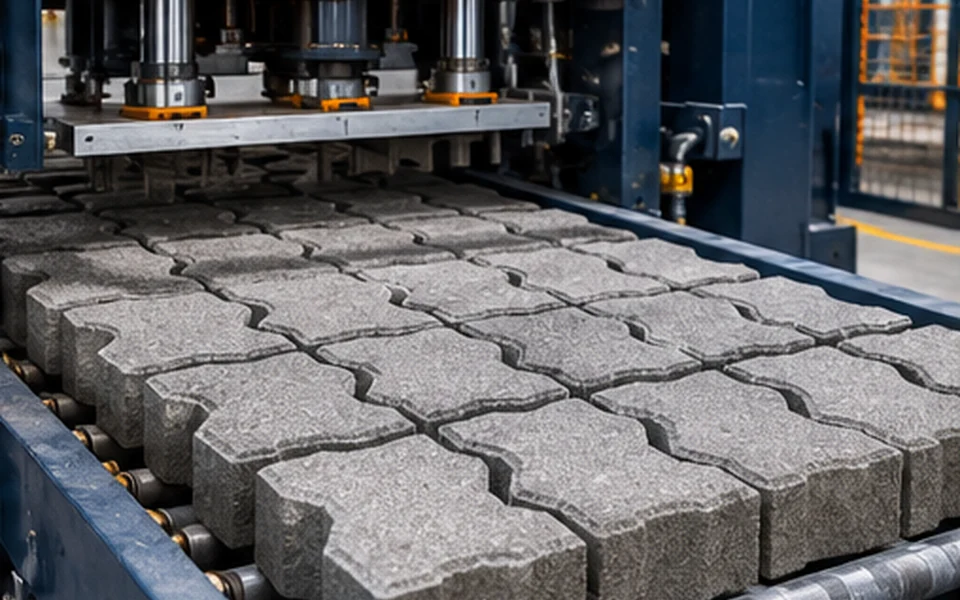
Planning a paver production line in Nigeria calls for a different commercial calculation from basic concrete masonry units. Paving projects may require several colours, thicknesses or interlocking patterns, and short orders can create more changeover losses than the nominal cycle time suggests. Begin by documenting the intended customers, the finished surface they expect and the packaging needed to deliver units without chipped edges. The line should make those products reliably rather than simply offer the widest theoretical catalogue.
Specify the saleable paving portfolio
List each paver profile, layer configuration and colour alongside expected batch size. A standard single-layer grey unit and a decorative face-mix product do not impose the same material-handling demands. If the sales plan includes kerbs or slabs, verify their mould height and transfer requirements separately. The selected mix of products determines which face-feeding, mould-change and storage features are necessary at startup.
Control colour across raw-material deliveries
Pigment dosage is only one factor in surface appearance; cement colour, fine aggregate grading and moisture can shift the finished shade. Where materials are received from different sources, define a retained sample and batch-record system before regular sales begin. Use actual local ingredients for the sample run and compare pavers after a consistent curing period. Rejects from colour drift can erase the apparent advantage of a high-speed machine.
Calculate the full pallet and curing circuit
A paver press can wait while finished units occupy curing positions or the dry-side cuber is being reset for another pack pattern. Count pallets in production, transfer, curing, empty return and buffer positions. Review how the plant handles an incomplete layer and how it prevents scuffing of decorative surfaces during transfer. This is particularly important for a facility producing frequent small colour batches.
Plan dispatch before buying the cuber
Pavers sold in small local deliveries may require a different pack and loading workflow from units supplied for larger projects. Define pack size, fork access, wrapping and storage arrangement so the dry-side machine is not specified in isolation. Loading equipment and vehicle movement should be separated from personnel access wherever possible. Stable, correctly identified packs are part of customer quality, not merely warehouse administration.
Purchase against sample-based acceptance
Request a witnessed run for representative colours and profiles with an agreed method for measuring dimensions and detecting surface defects. The commercial offer should distinguish pigment equipment, face mixer, curing storage and packaging from the press itself. Keep utility and training responsibilities clear, particularly when equipment is integrated from several suppliers. Review the paver machinery categories, face-mix technical guide and contact page when preparing the Nigeria project brief.