
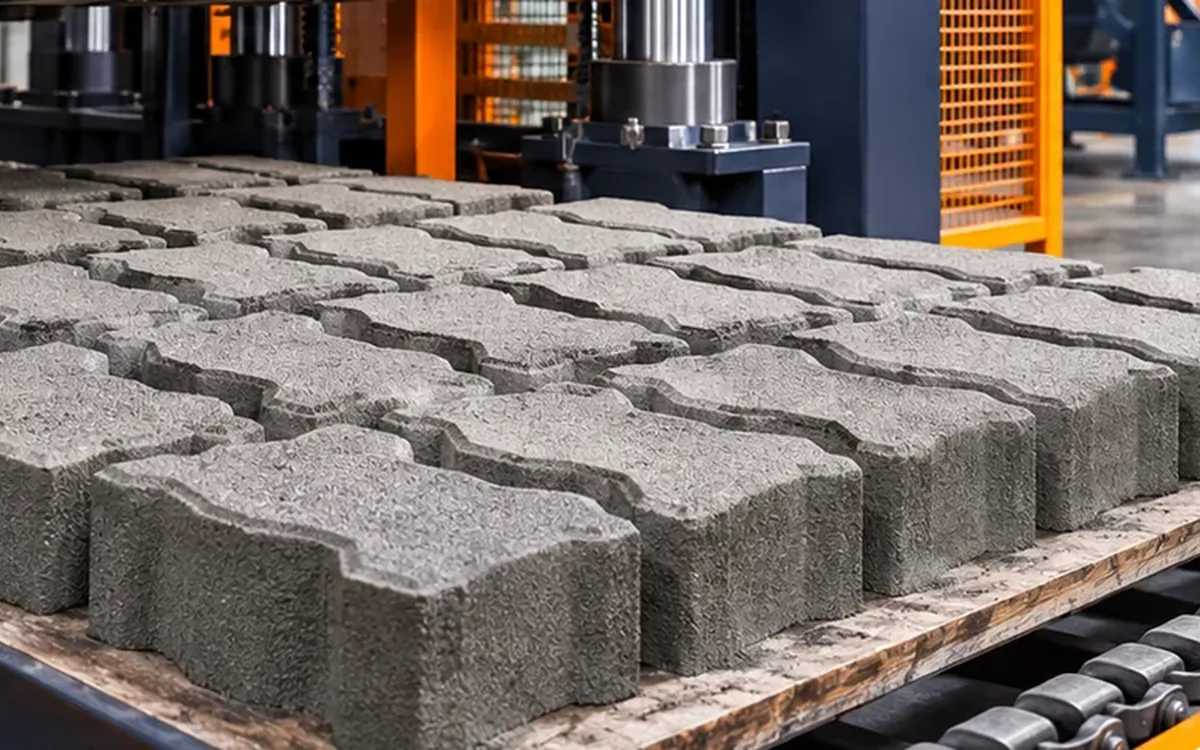
Two-layer paving products allow a producer to engineer the visible surface separately from the backing concrete. The face mix may contain finer aggregates, pigments and a carefully controlled binder system, while the base layer is designed around strength, geometry and efficient production. That flexibility creates additional process risks. Colour inconsistency, delamination and surface defects often originate in batching, timing or layer handling rather than in the nominal pigment recipe alone.
Define the visual and functional target before selecting equipment
A decorative paver can be judged by colour, texture, edge quality, wear behaviour and dimensional consistency. The product brief should identify intended use, market expectations, acceptable shade variation and the required performance standard. A visually attractive trial batch may not meet a project's abrasion, freeze-thaw or other durability requirements. Those properties must be checked by appropriate testing rather than assumed from its appearance.
Consider whether the product range includes single-colour face mixes, blended effects, exposed textures or frequent colour changeovers. Each choice affects equipment cleaning, material handling and the control system. The right face-mix line is the one that can reproduce the intended range over many shifts, not merely create one impressive showroom pallet.
Understand the interaction between base and face layers
The base and face mixes form one product during compaction and must behave compatibly. Differences in moisture, aggregate grading and consolidation can influence bonding between layers. The face layer also needs enough material to cover the visible surface without excessive consumption. A process that places an uneven layer may leave patches, expose the base or cause variation across the pallet.
Define the permitted sequence between base fill, face placement and final compaction. Timing can matter because the condition of the base layer changes while the press is operating. Supplier demonstrations should use representative product heights and mould formats. Process settings must be verified by trial products and suitable tests, not copied blindly from a different line.
Design accurate and repeatable pigment dosing
Pigments are only one factor in perceived colour. Cement colour, fine aggregate distribution, moisture condition, compaction and curing can also change appearance. A dosing system should deliver consistent quantities and prevent residue from one colour contaminating the next. Ask whether pigment is weighed, volumetrically delivered or prepared in a controlled liquid system, and understand the calibration and cleaning requirements of the chosen design.
Very small additions can be sensitive to measurement error, so accuracy should be evaluated at the batch sizes actually planned. Store pigment identification, lot and recipe revision with the production record. Changing pigment supplier or raw-material source may require renewed trials even when the nominal dosage remains unchanged. A reference panel system can help the team distinguish acceptable natural variation from a genuine process defect.
Match mixer and feed system to face-layer behaviour
A face mix usually presents different mixing and feeding demands from the base mixture. Mixer geometry, mixing sequence and batch size should support uniform dispersion without creating unacceptable segregation or build-up. The transfer route into the face-mix hopper should minimise dead spots, material retention and uncontrolled contamination. Cleaning access deserves particular attention because dried residue can compromise subsequent colours.
Evaluate the feed box with the intended mould profiles. A shallow or intricate paver surface may reveal uneven placement that is hard to see on a thick block. Monitor layer thickness at multiple cavity positions and across consecutive cycles. A machine setting that appears stable on an empty test run may behave differently with a specific coloured mixture.
Control curing and appearance assessment
Fresh pavers often change appearance as they dry and cure. Comparing a wet pallet directly with a dry reference can lead to unnecessary adjustments and shade drift. Establish a consistent point in the process for colour assessment, with controlled lighting and a documented reference sample. Product age, surface moisture and storage conditions should be recorded when appearance is disputed.
A uniform curing environment supports consistency, but curing conditions must also meet the product's performance needs. Avoid using appearance as a substitute for durability testing. If visible efflorescence or mottling occurs, investigate materials, moisture movement and storage conditions systematically rather than changing pigment dosage first.
Calculate production losses during changeovers
Multi-colour production is commercially attractive only when the line can switch recipes predictably. Cleaning of hoppers, mixers and feed systems consumes time and may generate material that cannot be used in the next batch. Include those losses in the production plan. Scheduling similar shades together may reduce changeover burden, but it must respect order priorities and product traceability.
A documented changeover procedure should state who authorises the next recipe, which sections are cleaned, how the first acceptable samples are approved and what happens to transitional product. The calculation of line capacity should include these interruptions rather than relying on a theoretical cycle count. Finished output and saleable output can differ substantially during a short colour run.
Specify acceptance samples and quality records
During commissioning, produce a defined set of pavers from several positions and batches. Record recipe, pigment lot, face-layer settings, mould, machine parameters and curing conditions. Agree the visual acceptance process and the physical tests appropriate to the product specification. A professional acceptance plan uses retained samples and reproducible conditions, not vague promises of “perfect colour.”
For related equipment, see the paver machinery range, the mould selection guide and the production-line options. Consistent face-mix production comes from controlling the entire path between measured ingredients and finished surface.