
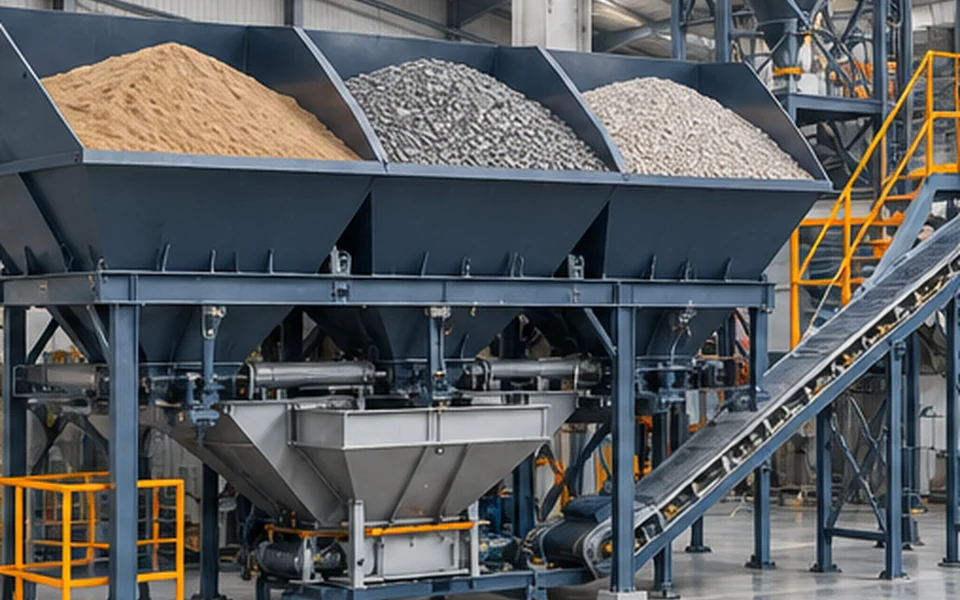
Equipment application
Batching equipment prepares repeatable material portions before mixing. Its selection depends on aggregate types, storage arrangements and the degree of automation used across the factory.
Material preparation and process control
Consider bunker access, load-cell protection, cement dosing and moisture variability. Poor weighing repeatability can be seen in product appearance and compaction even when the forming machine is operating normally.
Operating the connected production process
The unit should deliver at a rate that supports the chosen mixer and press with room for cleaning, maintenance and safe loading.
Requesting a practical equipment specification
Provide aggregate source information, expected recipe range and site arrangement for a batching layout review.
- Aggregate grading and moisture variability
- Required working batch size
- Mixer discharge and press feed arrangement
- Cleaning and liner maintenance scope
To plan aggregate batching and weighing unit within a complete plant, see the machinery category and the connected production line options.
Aggregate grading and moisture correction
Consistent concrete begins with knowing the quantity and condition of each aggregate fraction. Storage bins should avoid cross-contamination and support reliable discharge, even where sand contains variable moisture. Confirm how aggregate moisture will be measured and how batch water is adjusted; inconsistent wet aggregate can shift the effective mix well before the mixer or block press is involved.
Weighing accuracy and production rhythm
A batching arrangement should be evaluated against the mass per recipe, target batch frequency and available bin capacity. Review load-cell access, calibration procedures and the sequence used to discharge different materials. A weigh hopper that is frequently starved or overloaded can create variations between batches and prevent the forming line from using its intended operating window.
Site logistics and maintenance access
Consider truck deliveries, aggregate segregation, drainage, dust capture and safe routes for clearing blocked discharge points. The location of the batching unit changes conveyor lengths, power requirements and service access. Ask for a layout that shows concrete movement from weigh discharge to the mixer rather than treating the batching station as a standalone purchase.
Aggregate properties shape the dosing system
Block and paver production commonly uses several aggregate fractions, each with different flow characteristics and moisture sensitivity. Before designing the batching arrangement, identify grading ranges, particle size, expected delivery method and local storage conditions. Fine damp sand can behave differently from dry coarse material, particularly at hopper outlets. Consider whether the equipment needs agitation, special gate control or protected storage to avoid bridging and inconsistent discharge. Bins should prevent contamination between fractions and allow a safe, direct delivery route. The batching unit is part of a material-handling system, not simply a collection of weighing devices mounted above a conveyor.
Moisture correction and mix consistency
Moisture variation changes the effective water and aggregate proportions entering the mixer. A production plan should explain how moisture is measured or estimated and who authorizes correction. Inconsistent aggregate water content can create different forming behaviour even when scale readings appear stable. When the press begins producing chipped corners or weak edges, review the recent batching records before changing mechanical settings. Keep a practical log of sand source, weather exposure and recipe revisions. Moisture correction should be specific to the site's operating procedure; a sensor alone does not guarantee accuracy unless it is maintained, calibrated and used within an agreed control method.
Weighing accuracy and equipment calibration
Check the scale arrangement, load-cell mounting, mechanical isolation and the way residual material is cleared after each weighing cycle. Vibrations from conveyors or nearby machinery may affect measurements if interfaces are poorly designed. Establish calibration and zero-check procedures suited to the expected production schedule. The operating system should display meaningful faults when measured values differ from the permitted batch tolerance and prevent an unexamined sequence from continuing. Record batch totals for traceability rather than relying only on an operator's visual estimate of hopper contents. A transparent acceptance test measures actual discharged material and confirms repeatability across the normal aggregate range.
Keeping up with mixer and press demand
The batching sequence must deliver the correct ingredient set before the mixer is ready for its next cycle. Model the time needed for each fraction to discharge, the conveyor's travel and emptying time, and the mixer's own charge and mixing sequence. Small recurring delays can add up over a full shift. If different products require different aggregate recipes, include the change between them in the timing assessment. Check for places where material can remain on a belt or in a chute and unintentionally enter the next batch. A line is balanced only when material can be weighed and transferred reliably at the frequency the rest of the process requires.
Safe storage, dust control and service routes
Aggregate handling equipment needs safe truck access, loading space and cleaning paths. Dust may increase around dry fractions and cement transfers, making enclosure and local extraction part of the wider plant design. Provide access to weighing components without standing beneath a loaded hopper or crossing moving conveyors. Consider how spills are recovered and where accumulated material can be removed without mixing fractions. The proposed foundation should support both static material loads and the effects of operation. Plan space for future bins if a new product line will need additional aggregate grades, but confirm the control and electrical interfaces before assuming expansion is effortless.
Information to settle before ordering batching equipment
A useful inquiry includes aggregate types, expected moisture range, bulk-delivery arrangements, planned batch quantity, production schedule and mixer location. Supply available floor dimensions and a section sketch showing headroom and vehicle approach routes. Ask the proposal to define weighing method, discharge gates, conveyors, control integration, calibration responsibilities and the environmental controls included. Acceptance should confirm actual material weights, repeatability and clearing of the transport path between batches. Avoid comparing equipment on storage volume alone: reliable dosing, service access and integration with the actual mixer are essential for consistent concrete production.
System integration: Reliable aggregate weighing requires appropriate storage segregation, practical calibration and a means of responding to moisture changes. The machine alone does not determine a correct recipe if the supplied materials vary unexpectedly. The batching and forming overview shows how dosing decisions influence the concrete arriving at the press. When requesting equipment details, identify aggregate fractions, loading vehicles, proposed mixer, required batch volume and available installation space. These inputs help define scales, gates and transfer equipment without guessing a generic configuration.