
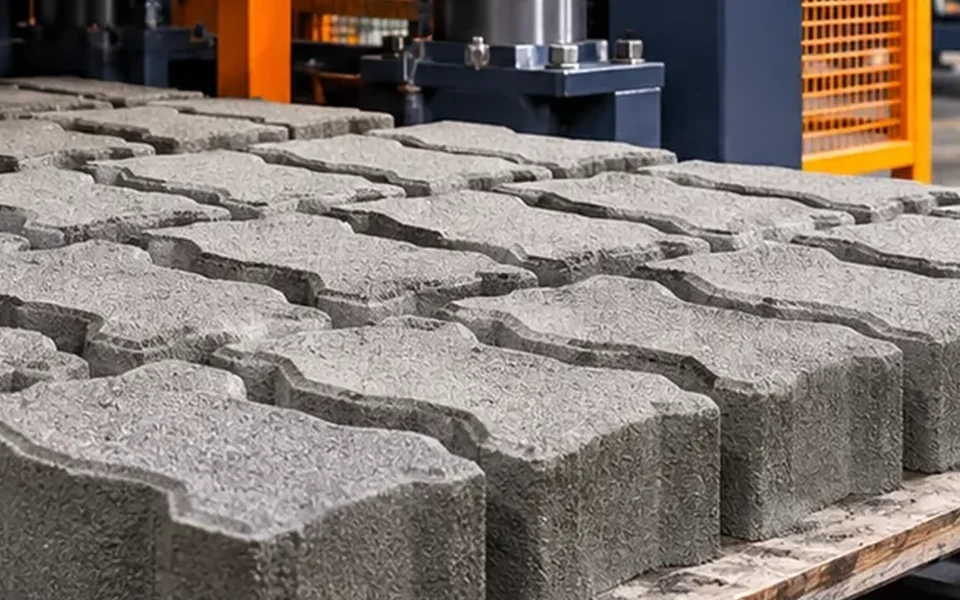
Architectural paving production often asks the same forming line to deliver both the structural body of a paver and a controlled visible surface. A face-mix station is part of that process, not an independent decoration unit. The geometry of the mould, base-layer condition, pigment dosing, feeder movements and compaction sequence must be considered together so the finished paver looks consistent and remains suitable for its intended use.
Separating base and face layer responsibilities
The base mix and the visible face mix serve related but different functions. The base layer often carries most of the product’s mass, while the face mix may use selected aggregates, pigments and finer materials to achieve a particular texture or colour. For this reason the two materials should not be treated as interchangeable simply because both can be mixed in concrete equipment. The plant must establish how each recipe is prepared and what physical layer thickness and surface characteristics are intended. A face-mix arrangement that works well for a thick conventional paver may not be appropriate for a thinner format or a different mould geometry. Trial products should reflect the full commercial range, not only one easy-to-manufacture size.
The buyer should obtain drawings for the proposed pavers and discuss how the press coordinates the base fill, initial compaction if applicable, surface fill and final forming movement. Interfaces are affected by mould depth, transfer mechanisms and the amount of surface material required for each pallet. If the feeding station is being retrofitted, confirm the existing press has suitable space, motions and controller capability. A vendor should explain the operating sequence rather than suggesting that an additional hopper automatically creates a multi-layer machine. Automatic interlocking paver machinery provides the broader forming context for evaluating this accessory.
Pigment dosing and repeatable surface appearance
Colour consistency begins before concrete enters the face feeder. Pigments must be measured and introduced according to an agreed recipe, while aggregate and cement variation may affect the final result. A dosing system should make the quantity, sequence and recipe identification visible to authorised staff. Where liquid or dry pigments are used, describe how material is stored, handled and prevented from contaminating other batches. Do not equate a repeatable dispenser movement with repeatable colour without checking the underlying materials and concrete moisture. An appearance-sensitive process should use sample approval criteria that account for curing conditions and normal production variation rather than judging colour immediately after demoulding.
Multi-colour or blended surfaces can require additional decisions about when materials meet and how much intentional variation is permitted. A station designed to deliver a uniform single colour may not produce a controlled mottled effect without other equipment and operating logic. Discuss how the plant identifies recipes, handles partial remaining batches and prevents inadvertent mixing when changing colours. Operators should have a clear procedure for the first production pallets after a changeover, including how to inspect surface distribution. Document approved sample panels, lighting conditions for comparison and rejection criteria so the sales expectation can be connected to what factory personnel can actually verify. Marketing photographs alone are not a substitute for agreed manufacturing samples.
Feeder motion, layer thickness and mould interface
Feeding action has a direct effect on how surface material spreads across a mould. Some paver shapes contain narrow recesses or broad visible faces, and the feeder may need a controlled motion profile to avoid leaving thin patches. Check the relationship between face-mix volume, target layer thickness, feeder travel and the position of any shaping or levelling devices. The system should be evaluated with the intended moulds, including edge profiles and any multi-cavity differences. A surface feeder that performs acceptably on one symmetrical product can reveal uneven distribution when the factory changes to a complicated interlocking form. These issues are best observed by inspecting samples from each position across the production pallet.
The press must also preserve the bond between layers while maintaining the product’s required compaction. Ask how filling and vibration steps are coordinated and how the control system handles an interrupted cycle after the base mix has already entered the mould. If a stoppage allows material to dry or segregate, restarting blindly may create weak interfaces or cosmetic defects. The correct response depends on materials and process design, and should be specified with the equipment supplier. The station must be accessible for cleaning and inspection without unsafe entry near moving tampers or conveyors. Discuss mould compatibility alongside block and paver tooling rather than as an afterthought.
Cleaning, segregation and material handling
Face-mix materials often make cleaning demands more visible because a small amount of residual pigment can alter the appearance of later products. Examine the geometry of hoppers, chutes and feeder compartments and identify places where damp material can accumulate. The preferred arrangement allows routine cleaning without exposing personnel to pinch points or requiring them to climb into equipment without a safe isolation procedure. If the station serves several colours in a shift, ask how leftover material is managed, whether dedicated containers are needed and how the first post-cleaning batch is checked. Environmental controls should also address dust or wastewater from washing and pigment handling.
Material handling should keep the face mix available when the press needs it but should not create long residence times that change consistency. Confirm how the station is replenished, whether the supply route crosses maintenance access and how an empty or blocked feeder is detected. Operators need a safe way to recover from an overfill or a partially discharged hopper. Surface defects can originate in mixing, delivery, levelling or compaction; the layout should make these stages observable enough to diagnose the cause. A compact feed station is only useful if its operation can be supported within the wider factory workflow. This is especially important when the same plant also produces standard blocks or kerbstones.
Acceptance tests based on actual paver families
An appropriate factory acceptance test produces representative pavers with an agreed recipe and mould set. Samples should be evaluated after appropriate curing, not only at the end of the forming conveyor. Examine surface coverage, visual consistency, layer bonding, edges and handling damage, using project-specific quality requirements. The test should include a colour change or recipe change if those are central to the factory’s product strategy. Record the time and work required for clearing, cleaning and restarting the feeder. A quoted speed that assumes no colour changes may say little about the actual order book of an architectural paver manufacturer.
Agree on the operational response to missing material, feeder misalignment, a stopped press and an interrupted batching supply. The controller should prevent a partial product from entering normal flow without appropriate review. Maintenance and process staff need a shared description of which faults call for cleaning, recipe verification or mechanical adjustment. Keep records of trial materials and approved samples, including the effect of curing on appearance. The paver production line should be checked as a complete system, because surface layer quality can suffer if upstream material preparation or downstream curing is inconsistent even when the feeder itself is operating correctly.
Project information for specifying the station
A practical enquiry describes the paver types, target colour range, expected surface finish, base and face recipes, mould dimensions and production schedule. Indicate whether the station is part of a new plant or must connect to an existing press and batching controller. Provide drawings and, where available, accepted surface samples. The specification should define which parts of pigment storage, dosing, mixing, feeding, controls and operator training are included. It is important to distinguish a simple surface feeder from a complete face-mix preparation system, since the latter can require its own weighing, mixer and material supply. This distinction prevents gaps between equipment quotations.
Ask the supplier to demonstrate the intended sequence and explain how recipes are protected, how changeovers are carried out and which materials can be recovered or reused. Clarify service access, spare parts, control backups and the conditions under which product appearance will be judged. Decorative paving production is both a process-engineering and quality-management task; it cannot be reduced to a picture of coloured blocks. A strong proposal includes the preparation and verification work necessary to produce repeatable commercial samples. The machinery, mould and curing specifications should therefore be reviewed together before accepting a system scope or making assumptions about the number of saleable pallets per shift.