
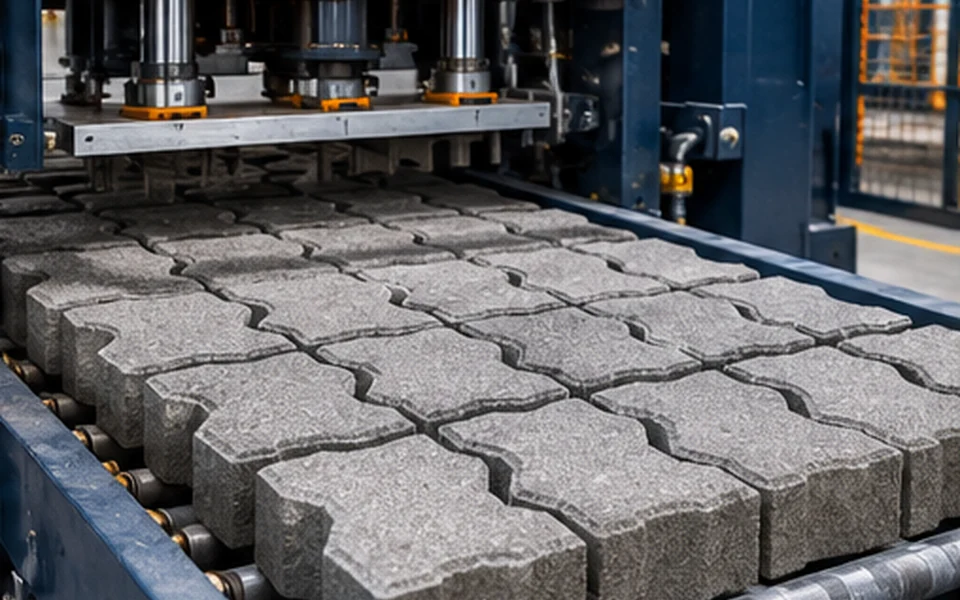
Equipment application
A paver production project should consider product geometry, desired surface appearance and repeatable edge definition. Forming speed is important, but consistent mix preparation and stable fresh-product transport are equally influential.
Paver formats and operating variables
For decorative pavers, assess colour or face-mix integration early. Mould changeovers must accommodate the number of patterns and thicknesses in the planned catalogue.
Operating the connected production process
When comparing suppliers, convert cycle assumptions to finished square metres per shift and account for curing and packaging availability. Include the pallet surface and allowable contact with fresh pavers.
Requesting a practical equipment specification
List expected paving patterns, preferred thicknesses, colour requirements and the finishing or packaging process in the enquiry.
- Paver pattern and thickness range
- Surface finish and colour requirements
- Mould changeover frequency
- Expected square metres per shift
To plan automatic interlocking paver machine within a complete plant, see the machinery category and the connected production line options.
Paver thickness, edge detail and surface quality
Interlocking pavers are judged both as structural units and as a visible finished surface. Edges, chamfers and face texture should remain consistent across the pallet. The desired product thickness and mould cavity arrangement affect fill uniformity, handling weight and expected cycles. If the product range includes coloured or two-layer pavers, the additional face-mix preparation and feeding sequence must be considered from the beginning.
Colour management and batch discipline
Where colour is part of the sales programme, aggregate moisture, cement shade, pigment dosing and curing history can change the appearance of adjacent batches. Define a reference sample and a procedure for checking colour before full-scale operation. A press capable of forming pavers reliably still needs a disciplined batching process to minimise visible variation once units are laid together.
Packing and site installation interface
The way units are cubed and packaged influences breakage, transport efficiency and sometimes the paving pattern available to installers. Confirm whether the plant should pack mixed shapes, separate colours or layer patterns suited to mechanical placement. Include finished-pallet dimensions, wrap protection and loading equipment in the production plan rather than treating packing as an afterthought.
Treating pavers as an engineered product family
Interlocking paving units differ in thickness, joint geometry, edge profile, surface finish and intended traffic application. A production plan must distinguish standard grey pavers from architectural or coloured products because the mix, mould and quality expectations change. Provide drawings for the intended shapes and identify tolerances for height and edge integrity. A paver may leave the press looking acceptable but create installation problems when dimensions vary across a pallet. Ask how the machine manages feeding and mould alignment across different cavity layouts. Repeatability is especially important where units are laid in long patterns and small dimensional changes accumulate across the finished surface.
Base mix, face mix and appearance consistency
Pavers sold for decorative applications need controlled surface appearance as well as sound compaction. Where a face-mix system is planned, define the thickness of the face layer, colour dosing method and interface with the base concrete. Moisture variation can affect how pigment is distributed and may create shade differences between batches. Record aggregate source, colour addition and mixing sequence during trials. If the plant uses only a single mix, explain the required surface character and any secondary finishing instead. A production proposal should not claim consistent colour from the press alone; the batching process, curing environment and handling all contribute to final appearance.
Cycle assumptions and pallet layout
Output estimates for pavers should be tied to cavity count and the actual shape rather than a vague pieces-per-hour rating. Large or intricate units can have different filling needs from rectangular pavers, and varying thickness can affect the mould and tamper arrangement. Check that the selected production pallet keeps formed pieces stable on the wet-side conveyor. If the business intends rapid movement between designs, include pallet and mould changeover time in the forecast. Use a representative week with popular and special-order products, then model the amount of curing storage needed for that mix. This reveals whether a proposed press speed is meaningful for the complete plant.
Curing and colour-related quality controls
A visually attractive surface can still develop edge damage or colour variation if green units are disturbed or cured inconsistently. The plant should control where pallets stand, how moisture is managed and when pieces are strong enough to be separated from the production pallet. Trace samples to batch records and compare both dimensional and visual results after the agreed curing period. Keep products of different colours and ages identified in storage. If surface finishing or washing follows curing, assess whether the selected mix and product thickness are suitable for that additional process. Quality checks should reflect the product's eventual use, not just its appearance under factory lighting.
Cubing, wrapping and delivery protection
Pavers often reach construction sites in layered cubes, which makes the final packing operation part of the design. Evaluate layer arrangement, product orientation, slip sheets where appropriate and stability during forklift handling. Decorative units may require protection from rubbing and chipping during transport. A packaging station should also preserve batch and colour identification so installers can manage variation appropriately. Plan the dry-side area for safe machine access and enough space to segregate nonconforming pieces. Ask how finished products are moved without damaging the face layer. The downstream system should be evaluated against the heaviest and most fragile paver formats, not only a standard rectangular unit.
Acceptance tests for the planned paving range
Before procurement, agree on sample products that represent a standard shape, a difficult interlocking detail and any special surface requirement. Record press conditions, visible defects, dimensions, pallet quality and the volume of rejected units over a meaningful run. Where face mixing is supplied, test actual colour changes and cleaning requirements instead of showing one uninterrupted colour. Clarify which properties will be measured after curing by an appropriate method. A complete technical quotation should identify the press, moulds, face-mix equipment if applicable, mixer interfaces and cubing requirements. This prevents an attractive product demonstration from disguising missing plant equipment.
System integration: Paver performance must be evaluated using the intended interlocking geometry and the target appearance of the finished surface, including coloured face layers where planned. A press can perform consistently only if batching and curing conditions support the product specification. The automatic paver production line connects the forming process to surface handling, curing and final stacking. Share product drawings, colours, expected square metres per shift and required packaging style when describing the project, instead of comparing a nominal pallet rate in isolation.