
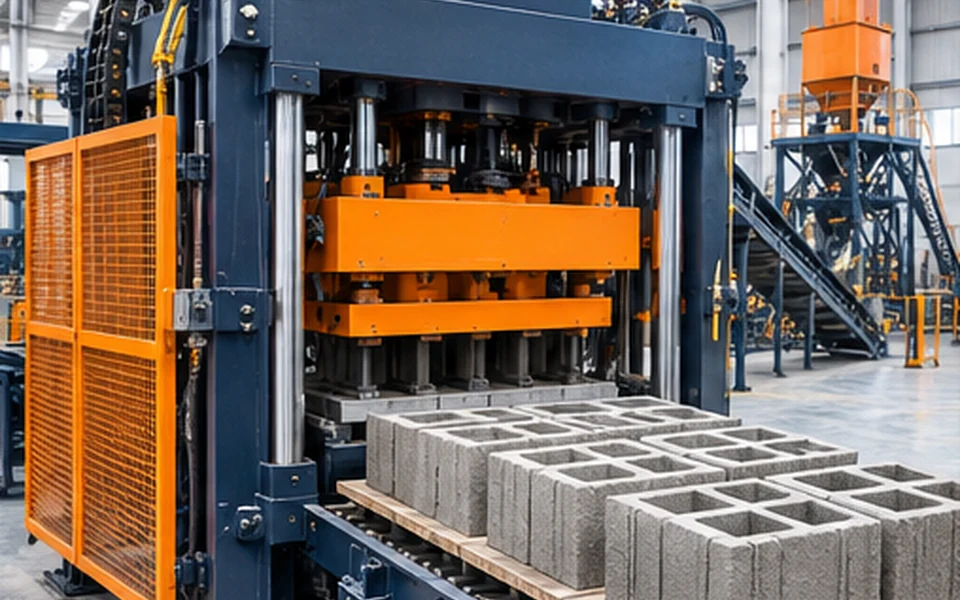
Equipment application
A stationary automatic block machine is suitable when the target includes repeatable production over regular shifts and the factory can support coordinated material feeding, pallet supply and green-product transfer.
Forming and product requirements
The mould, tamper, filling arrangement and vibration profile must be configured for each block geometry. A hollow unit with thin webs presents different filling and edge-integrity challenges from a dense solid unit.
Operating the connected production process
Assess pallet dimensions, realistic cycle range under the intended mix, changeover frequency and curing rack turnover. Confirm the machine can be accessed safely for maintenance without obstructing the wider line.
Requesting a practical equipment specification
Provide block dimensions, daily output target, available electricity and preferred labour level. A technical proposal should identify the matching batching and handling equipment instead of quoting only the press.
- Block format and cavity drawings
- Pallet footprint and product height
- Vibration and filling cycle assumptions
- Green-product transfer and curing method
To plan industrial automatic concrete block machine within a complete plant, see the machinery category and the connected production line options.
Vibro-press set-up and green-block integrity
A sustained-output block press needs a repeatable relationship between feeder travel, concrete consistency, vibration and tamper movement. Hollow blocks are especially sensitive to incomplete filling around webs and corners. During trials, record defects by cavity location rather than averaging all products together; a recurring weak corner may indicate the feeder profile or mould wear rather than a general mix problem. The machine and mould supplier should clarify how different wall thicknesses affect fill depth, compaction and safe ejection.
Production pallet, line timing and changeovers
Ask for pallet dimensions and the allowable product height range before any cycle-time comparison. A pallet that supports more cavities can also carry more weight and require a different transfer system. Verify the clean changeover process, lifting provisions, alignment reference points and access to securing hardware. In a real shift, tool changes, hopper cleaning, test pieces and restart verification can alter the effective average production time substantially.
Acceptance evidence for an automatic press
A meaningful factory acceptance trial should use your intended block drawing and a documented concrete mix, not only a demonstration product selected for easy forming. Record sustained cycles, rejected units, handling interruptions, operator interventions and the required adjustment steps. Request a clear list of electrical, hydraulic and control documentation as well as mould drawings, lubrication points and safety-interlock functions so the equipment can be operated and maintained after installation.
Defining a production duty before selecting the press
Start with the drawings of the blocks that will actually sell, including length, height, hollow arrangement, minimum web thickness and any special face details. Build a normal-week production plan rather than choosing a machine by an advertised maximum cycle figure. It should identify which products run every day, which are seasonal and how many tooling changes are expected. A high number of small batches often changes the preferred machine arrangement because cleaning, positioning and quality checks occupy meaningful time. The realistic duty also needs the proposed shift pattern, hours lost to regular service and expected staffing. These requirements establish the design envelope for the press, pallet inventory and surrounding material preparation system.
Assessing feeder and vibration coordination
The feeder, mould and vibration assembly form one controlled process. Low-slump concrete must be distributed into narrow webs and corners without excessive segregation, so feeder travel, mixing consistency and filling time deserve scrutiny. During trials, compare units from opposite sides of the pallet and note whether the same cavity shows weak corners or variable height. Increasing vibration is not a universal cure: it can alter product appearance and may cause difficulties with certain mixes. A useful technical proposal explains the adjustable forming parameters, how recipes are stored and which settings the operator can change during a production run. The objective is a repeatable product, not merely a fast-moving press.
Designing the pallet and green-product route
An automatic machine relies on a dependable pallet loop. Confirm the supported pallet dimensions, permitted flatness, load, return condition and replacement strategy. Pallets must enter the machine accurately and leave with freshly formed products without jolts. Draw the complete route from forming to curing, then from the dry-side operation back to the press. The selected transfer speed and rack interface should suit the heaviest unit as well as a normal hollow block. A conveyor that works for one pallet format may not suit a proposed future mould. The entire loop needs enough spare pallets and staging positions to avoid stopping production when the curing section is full.
Checking utilities, access and safe recovery
Stationary automation should be evaluated with an electrical and maintenance layout, not only a machine footprint. Request the nominal power distribution and peak starting assumptions for the press, material handling and shared services; site voltage and frequency must be agreed before configuration. Hydraulic units, filters, lubrication points and vibration components require access without working beneath unsupported equipment. Ask what happens when a pallet arrives out of position or the green-product conveyor stops unexpectedly. A sensible recovery sequence brings actuators to a known condition and prevents unexpected restart. Operators also need clear boundaries between automatic running, supervised manual functions, mould changes and maintenance isolation.
Factory acceptance trials using representative products
Arrange the acceptance demonstration around a real block drawing and an agreed mix preparation method. Record product dimensions, visual defects, cycle stability, stopped time and operator interventions separately. The programme should include restart after a planned stop, a tooling or recipe change where relevant and inspection of sample units from multiple mould cavities. Early green strength is not the same as final conformity, so identify the curing and laboratory checks that will take place later. Photos and measurements of the same product across a longer run are more persuasive than a single showcase pallet. The documented outcome should include open corrective actions and the responsibilities for resolving them.
Preparing an actionable quotation request
An engineering inquiry should include the expected block assortment, representative drawings, shift hours, approximate daily demand, site size, utility supply and preferred automation level. Indicate whether a batching plant, mixer, moulds, curing equipment and cubing are already available or must be supplied. Explain any constraints on building height, truck access and forklift movement. It is useful to describe your staff experience and the desired level of remote diagnostics or spare-part support. The resulting offer should define the equipment boundary, included tooling, training, acceptance criteria and interfaces with machinery supplied by others. These details make proposals easier to compare without assuming an unverified production capacity.
System integration: A press intended for long production runs should be assessed against the number of fresh pallets its curing area can accept, not only the press cycle. Before requesting a quotation, specify the hollow-block drawings, pallet size, planned shift duration and available handling space. The complete block production-line overview helps identify whether elevators, rack storage and cubing are included. Use the project enquiry form to record which equipment already exists and which interfaces must be supplied.