
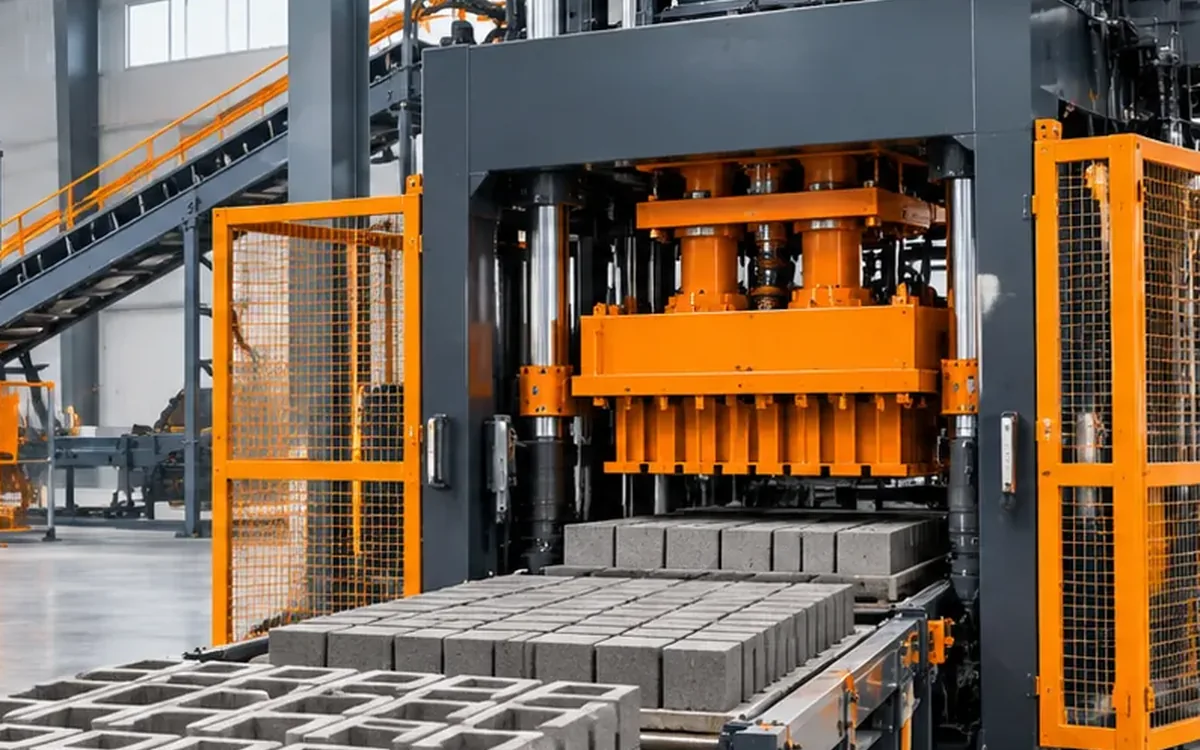
Equipment application
High-output block presses are used when demand justifies a machine designed around regular operation and disciplined tooling management. The investment should be evaluated as part of the total production line, not in isolation.
Forming and product requirements
Multiple product families introduce trade-offs between mould size, cycle time, aggregate selection and pallet inventory. Production plans should show how often moulds change and which products require separate mix or surface treatment.
Operating the connected production process
Machine throughput estimates should be checked against material supply, curing accommodation and automatic handling. The required utility supply, maintenance clearance and spare-part strategy deserve equal attention.
Requesting a practical equipment specification
Share the intended product schedule and actual market mix so a high-output configuration is not oversized for a small or frequently changing production programme.
- Block format and cavity drawings
- Pallet footprint and product height
- Vibration and filling cycle assumptions
- Green-product transfer and curing method
To plan high-output multi-product block press within a complete plant, see the machinery category and the connected production line options.
Capacity must be evaluated by product mix
An output-oriented machine is not automatically the economical choice for a plant with a fragmented product portfolio. Large pallets and multi-cavity moulds favour longer runs of consistent geometry. Every switch from masonry blocks to pavers or kerbstones changes feeding, compaction, demoulding and downstream stacking assumptions. Build a weekly production schedule showing the expected number of mould changes and the volume produced between them before selecting a larger press class.
Mould handling and machine utilisation
Where moulds are heavy or frequently exchanged, dedicate safe staging space and appropriate lifting equipment near the press. Measure adjustment, verification and cleaning time separately from the physical lift. The mould catalogue should show which product families share compatible heights, pallets and tooling interfaces; a machine advertised as multi-product may still require substantial surrounding equipment changes for a different unit.
Synchronising the heavy-duty line
An ambitious forming cycle cannot be sustained if aggregate weighing, concrete delivery, pallet returns or curing turnover fall behind. Model the line using measured batch sizes and an agreed shift utilisation factor, then check both the fastest and heaviest product scenarios. A high-output proposal should show where buffer capacity is available, how stoppages are recovered and which systems must be upgraded if future demand grows.
When a larger press class makes commercial sense
A multi-product high-output machine earns its place through sustained demand and consistent use, not an isolated headline throughput. Estimate the proportion of hollow blocks, solid blocks, pavers and kerbstones in a normal month. For each, record tooling changes, preparation time and likely batch length. A plant with many short runs may gain less from a larger forming area than a plant producing one popular unit for long shifts. Account for weekend shutdowns, seasonal product changes and the available labour for tool changes. The investment comparison should include the entire handling and curing system required to keep the press supplied and to remove product at the same pace.
Comparing product programmes rather than peak cycles
A large pallet can hold a greater number of some units, but heavy and awkward products may use fewer cavities and a different movement pattern. Calculate output separately for the representative moulds, using realistic changeover and inspection allowances. Include the mix preparation cycle and the time needed for colour changes when the business also makes architectural pavers. If a quoted figure is given as blocks per hour, request the actual block dimensions, mould cavity count and assumed running conditions behind it. A transparent comparison distinguishes forming cycles from saleable pieces leaving curing. Without that common definition, two high-output offers may appear comparable while describing very different factory operations.
Heavy tooling, mould logistics and operator safety
Large mould assemblies require a dedicated handling plan. Check the lifting points, mass information, changeover access and safe resting positions around the machine. An overhead crane or mobile lifting system must approach the service position without crossing other work areas. Reserve floor space for unused moulds, cleaning and measured inspection before they are installed. Changes should follow a documented sequence so locating features and machine interfaces are not damaged during hurried production. Discuss the replaceable wear surfaces and which inspections can be completed without dismantling a complete tool. A fast mould exchange is valuable only if operators can reproduce alignment and quality consistently afterwards.
Keeping batching, curing and cubing in balance
High-output forming can expose weaknesses elsewhere in the plant. The mixer must deliver suitable batches in time; conveyors must carry the actual pallet load; curing storage must absorb product while it develops the required properties. Evaluate the heaviest product and the fastest-running product as separate line scenarios. Model the number of loaded pallets entering curing each hour and the empty-pallet return requirement after cubing. Where downstream equipment temporarily stops, define the available buffer and the expected response of the press. A proposal for an upgraded machine should identify what must change in aggregate storage, mixing, pallet circulation and dispatch to avoid paying for capability that cannot be used.
Energy, wear and maintenance at sustained utilisation
A machine scheduled for multiple shifts has a different maintenance burden from one operating intermittently. Ask for access diagrams, lubrication routes, critical spare assemblies and recommended inspection intervals appropriate to the expected duty. Compare energy use at the complete-system level, including compressors, conveyors, mixers and curing services; figures for the press motor alone do not represent factory consumption. Review wear-sensitive zones such as feeder components, mould contacts, guides and vibration connections. Plan condition checks so early deterioration is visible before it affects a large volume of products. Any supplier performance claim should state the test configuration and the service assumptions on which it depends.
Commissioning milestones for a complex plant
An integrated project benefits from staged acceptance: mechanical installation, electrical checks, dry cycling, material trials and a defined sustained-production run. Assign responsibilities for foundations, cranes, utility connections, PLC signals and safety interfaces before machinery reaches site. Consider an acceptance set using several actual product types rather than selecting only the easiest mould. Record downtime causes and rejected pieces by process stage so improvement work is targeted. For the commercial scope, request a detailed inclusion list covering the press, standard and optional tools, batching links, product transfer and staff training. This reduces disagreement over whether the proposal covers a machine or a factory-ready production system.
System integration: An industrial multi-format press can change between masonry units, pavers and kerbstones, but the practical value of that flexibility depends on tooling logistics and finishing requirements. Examine the full programme by product family and estimate planned changeovers as well as formed pallets. In the integrated production-line concept, the factory is organised around mixed handling and curing needs. For a relevant quotation, separate the products required from day one from those considered for a later phase.