
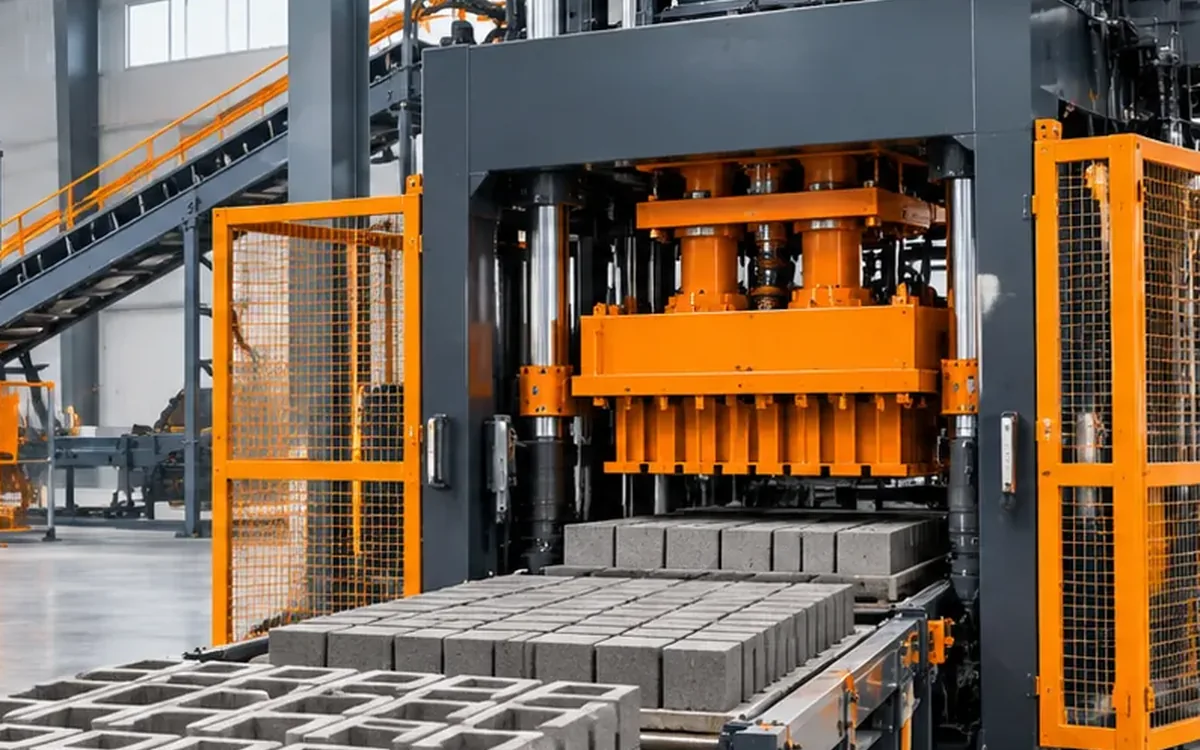
The connection between pallet geometry, mould output, handling capacity and factory investment.
Production pallets are part of the forming process. Their dimensions affect the maximum mould footprint, spacing between units and the number of blocks or pavers made during one cycle.
Larger pallets may offer more cavities for some products, but they also affect the load carried by conveyors, racks and transfer equipment.
Pallet flatness, stiffness, durability and surface properties influence production quality. A damaged pallet may distort fresh products even if the machine settings are correct.
Inspect pallet cleaning, storage and return routes; these often reveal hidden operating costs.
Estimate how long each pallet remains occupied by newly formed product, including curing and handling time. The number of available pallets should support the planned cycle without causing frequent stops at the press.
Use production assumptions that include planned breaks and realistic availability rather than relying exclusively on nameplate capacity.
A change of pallet size can affect moulds, feedbox settings, elevators, finger cars and cubing systems. Review the entire production loop before altering pallet dimensions on an existing plant.
When evaluating why production pallet size matters, record the operating assumptions most relevant to the proposed product mix and factory conditions. Ask for a written scope of equipment, utilities and product quality verification.
For related equipment see concrete block machinery and plant configurations.
A production pallet determines the useful mould envelope, the number of units per pallet and the compatible handling equipment. The outer pallet dimensions alone may not define usable mould space because clamps, margins and tooling clearances also matter. Review the requested block geometry and mould cavity arrangement against the actual supported area, not only a nominal catalogue size.
A pallet that works under the press must also move through elevators, curing racks, finger cars and return conveyors. Verify the loaded mass, stiffness, guide locations and wear behaviour in each station. The required number of pallets depends on cycle timing, curing occupancy, return travel and the ability to remove damaged pallets without disrupting the whole loop.
Where future products are planned, compare their mould arrangements and maximum heights before fixing the pallet standard. Changing the pallet format later can affect multiple downstream machines, storage racks and even building clearances. That is why a pallet decision should involve the whole plant team rather than only the machine purchaser.
Consider the pallet as a forming component
A production pallet is not just a board used to transport concrete. It supports the material during filling, vibration and compaction and then carries a fragile fresh product through the first part of the line. Its width and length influence the mould area and cavity layout, but thickness, flatness, stiffness and surface condition are equally relevant. A larger footprint can increase pieces per cycle while carrying a greater load that affects deflection and conveyor duty. Check the machine supplier's approved pallet range rather than assuming any pallet with similar outer dimensions will work. If a factory intends to make tall blocks as well as thin pavers, consider how both products affect allowable mass and handling clearance. Pallet suitability must be verified across the actual product portfolio and throughout the forming process.
Connect cavity count with transport and curing inventory
The number of pieces on a pallet cannot be evaluated apart from the route those pieces follow. If a mould produces more units, the combined green-product mass may rise even when the machine cycle time does not change. Wet-side conveyors, elevators, rack trays and finger cars must be able to support that load and the selected pallet geometry. Estimate the number of pallets simultaneously circulating during a real production shift, including those held in the curing store and those returning empty. A shortage of usable pallets can stop a press whose nominal capacity looks impressive. Identify how many damaged or out-of-tolerance pallets are removed from the loop in normal maintenance. The complete line should have a defined pallet specification and an inventory plan, rather than a machine-only pallet estimate.
Assess dimensional stability and surface wear
Repeated vibration, moisture, cleaning and mechanical impacts can change pallet condition over time. A warped pallet can affect forming support and produce inconsistent thickness or edge geometry, while surface damage may make fresh units more difficult to release. Ask how pallets will be inspected and what criteria trigger removal from service. Ensure operators can identify and segregate defective pallets rather than letting them circulate unnoticed until product rejection rises. Storage practices should reduce accidental deformation and protect usable pallets from forklift damage. When comparing pallet materials, focus on duty cycle, moisture exposure, repair or replacement options and compatibility with existing handling devices. The cheapest pallet price is not meaningful if the factory cannot maintain repeatable product dimensions under its expected operating conditions.
Confirm machine interfaces before changing dimensions
Changing pallet size after a plant has been designed may require modifications far beyond the press. Conveyor guide spacing, chain support, rack clearances, elevator forks, cubing devices and stacking patterns can all depend on the original geometry. A proposed larger pallet might reduce cycle count but exceed the safe lifting capacity or available rack width. Verify useful forming area, pallet positioning sensors and mould mounting limitations before requesting an alternative footprint. Ask for interface drawings from every machine supplier that touches the pallet, including third-party handling equipment. Consider product-overhang limits and access for cleaning material that falls outside the mould. Compatibility problems discovered after installation are particularly expensive because they often involve several pieces of equipment rather than one replaceable component.
Use a documented pallet specification in purchasing
A serious pallet specification should identify nominal dimensions, permitted variation, flatness, thickness, load and environmental assumptions together with the surface quality required for the product family. The supplier should explain inspection methods and how damaged pallets are tracked. Link pallet ordering to the planned production and curing schedule so inventory does not become an afterthought during commissioning. During acceptance tests, examine products from multiple pallets, especially after repeated cycles and normal transfers. If additional product families are planned, ask whether the same pallet can support their tooling and curing requirements. Use the machine selection guide and the curing and cubing line to evaluate the wider consequences of pallet choice. A robust pallet decision protects both production rate and dimensional consistency.