
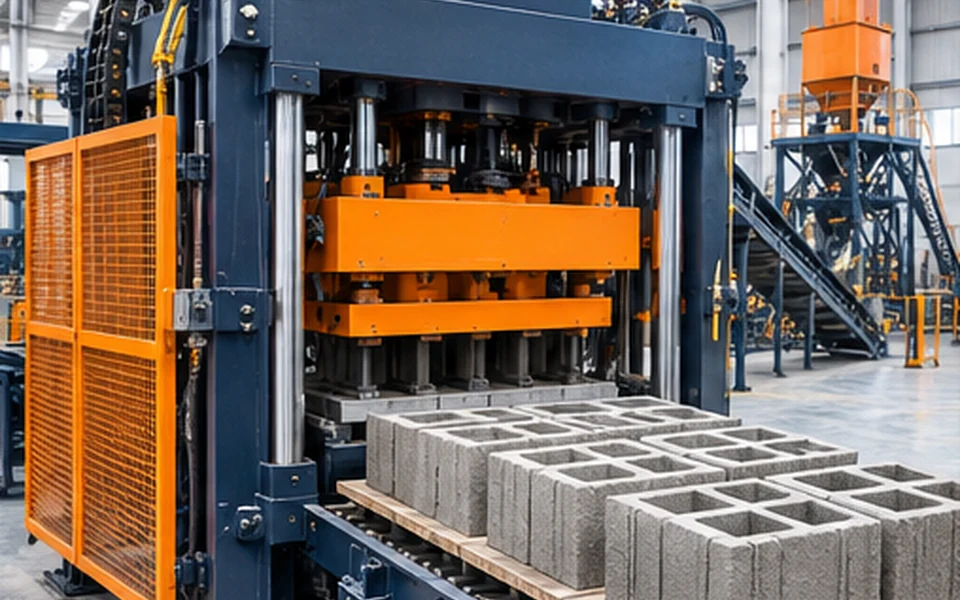
A buyer-oriented framework for machine class, output assumptions, pallet size, moulds and factory flow.
Choose the product family before the machine. Standard hollow masonry blocks, solid units, pavers and kerbstones differ in height, weight, shape and handling needs. Obtain drawings, tolerances and expected sales volume for each product, then establish which products will dominate the production calendar.
A proposal built around only the biggest machine number rarely answers whether that machine is appropriate. The investment should serve actual demand, not a theoretical catalogue maximum.
Write down shifts per day, realistic operating hours, product mix and planned downtime. Calculate pieces per pallet, cycles per hour and expected line availability as separate assumptions. The result is a range, not a guaranteed output figure.
If several moulds will be used, include time for changeovers and cleaning. A plant that changes products every few hours must be planned differently from one manufacturing the same block all week.
The mixer must prepare enough consistent concrete for the press. Fresh pallets require transfer and curing capacity; finished products require safe cubing and dispatch. These systems should be compared using the same shift scenario.
Ask for a clear statement of which components are included in the line and which are excluded. A low initial press price can conceal significant downstream costs.
Confirm maintenance access, operator safety, available utilities, drawings and documentation requirements. Compare suppliers on serviceability and clarity of proposal, not claims that cannot be validated under your production conditions.
When evaluating how to choose a concrete block making machine, record the operating assumptions most relevant to the proposed product mix and factory conditions. Ask for a written scope of equipment, utilities and product quality verification.
For related equipment see concrete block machinery and plant configurations.
Advertisements often express capacity as cycles per hour or blocks per shift. Those figures need an agreed mould layout, assumed operating time and a definition of an accepted finished block. The practical comparison should begin with the same product drawing for every candidate machine. Include mix availability, mould changeovers, handling restrictions and curing space before translating forming cycles into likely dispatchable units.
Prepare a simple packet containing block dimensions, expected daily quantities, dominant product families, available working hours, utility characteristics and the proposed site footprint. Ask each supplier to identify the equipment included in the quoted boundary, the assumptions used for output and the tests planned at commissioning. That approach makes different proposals more comparable than a list of attractive machine names.
The forming press may be the most visible machine but it is only one step in a production factory. Fresh blocks need supported transfer and curing, while cured units need stripping, packing and dispatch. A proposal that excludes these operations can still look inexpensive even though it cannot sustain the stated daily output without additional equipment.
Describe the commercial product mix before evaluating a press
The word “block” covers products with very different forming demands. A factory producing ordinary hollow masonry for local contractors may need a different mould programme and handling method from a plant selling dense solid units or occasional high-finish paving. Prepare dimensioned drawings for the products expected to carry most of the sales volume and for one difficult shape that tests the equipment's flexibility. Record whether the market values a wide range of sizes, low changeover cost or long uninterrupted runs of a single unit. This allows the technical review to focus on mould envelope, product height, cavity geometry and surface appearance instead of a generic model hierarchy. Ask which features are included in the base configuration and which depend on special feeders, controls or tooling. Buying the highest nominal machine class is not automatically the best choice when everyday demand does not justify its full line infrastructure.
Compare capacity under the same real operating assumptions
A quoted cycle time is difficult to compare unless it refers to the same product, pallet size and mixture. Ask each supplier to show units per mould, expected stable cycles per hour, shift duration and allowances for cleaning, inspections and changeovers. Then assess whether the mixer, concrete feed, wet-side transfer and curing storage can support that schedule. Calculate rejected and reworked units separately from gross formed output, especially when a new mould requires process tuning. Examine whether the factory will run one or two shifts and whether seasonal demand justifies larger automation investments. Use realistic assumptions for operator breaks and scheduled maintenance rather than silently counting every minute as producing time. The block output estimation guide explains the relationship between mould count, cycle frequency and saleable production in more detail.
Make mould compatibility a purchasing condition
Tooling is an ongoing operating asset. Confirm the proposed machine's pallet footprint, useful forming height, tamper travel, mould mounting details and interface with the feeder before ordering a product family. If the factory already owns tooling, a physical compatibility check is necessary; similar nominal dimensions may hide differences in mounting and alignment. Ask what is involved in changing a mould safely and how long a typical change takes once lifting, cleaning, calibration and the first acceptable pallet are considered. Where product designs contain narrow cores or delicate face details, request a representative trial instead of relying on pictures of standard blocks. Evaluate whether wear components can be replaced locally and how revisions to mould drawings are controlled. Tooling support can influence lifetime factory cost more than a small difference in the machine quotation.
Visit the logic of the whole factory, not the headline machine
A concrete block press forms fresh units that still require transport, curing and handling before dispatch. Draw a simple line from aggregate arrival through batching and mixing, press feeding, green-product conveyance, curing, dry-side cubing and stock storage. Mark which steps are automatic and which rely on operators or forklifts. A machine that appears suitable in isolation may become inefficient if the intended building cannot accommodate required rack space or service access. Ask the equipment supplier to define exactly what is in scope: pallet inventory, moulds, conveyors, curing system, controls, installation support and training are often treated differently. Inspect the location and accessibility of hydraulic power units, sensors and electrical cabinets, because future maintenance is a normal part of plant ownership. The complete line overview is useful when comparing press offers with different downstream scopes.
Decide from documented trials and a usable offer
A good factory trial reports the product geometry, mix preparation, operating settings, sample dimensions and any defects seen across the mould cavities. Repeated runs reveal issues that a short promotional demonstration can conceal. Request the same type of evidence for start-stop recovery, missing pallets and practical cleaning where those scenarios are relevant to the chosen automation. Commercial documentation should list site utilities, operator obligations, excluded civil works, commissioning arrangements, warranty scope and the availability of service parts. Ask which documents and software backups are handed over, and what training makes the line operable by local staff. Instead of asking which press is universally “best,” identify the option that can make the target products safely, consistently and at a justified installed cost. This creates a more defensible technical purchase decision.