
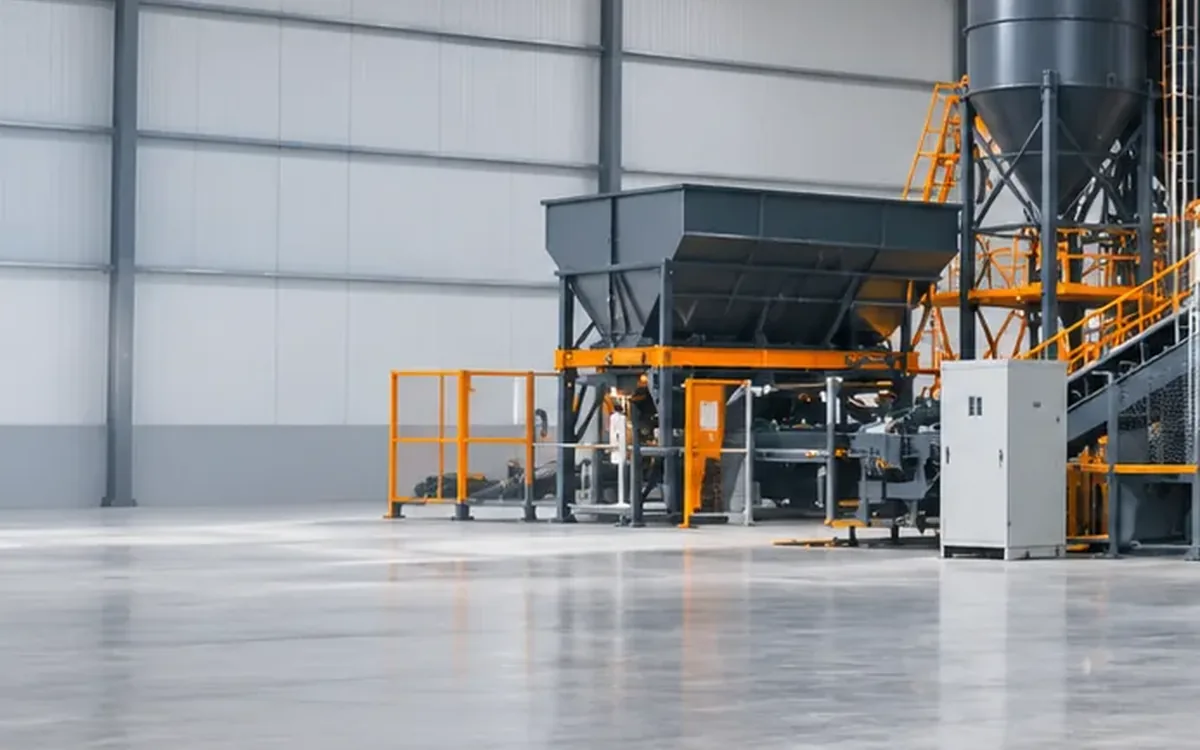
An engineering checklist for scope, utilities, performance assumptions and after-sales planning.
Request a clear scope statement separating forming equipment, batching, mixer, pallets, curing storage, handling, cubing, packaging, installation and training. Ask which civil works and utilities are excluded.
A quotation that omits one of these systems can be difficult to compare with a complete alternative.
Ask suppliers to show output calculations for your real products, operating hours and expected downtime. Product mix can materially change performance, so use a set of representative products rather than one ideal test block.
Check the expected curing and stacking capacity against the same scenario.
Confirm site size, power and water requirements, raw-material storage, personnel routes, environmental controls and safe equipment access.
A line designed for another factory should not be treated as directly transferable without reviewing local constraints.
Discuss spare parts, support documents, operator training, troubleshooting and planned inspection procedures. Identify critical components that may be difficult to obtain quickly.
A transparent maintenance plan is part of the purchase decision.
When evaluating questions before buying a block production line, record the operating assumptions most relevant to the proposed product mix and factory conditions. Ask for a written scope of equipment, utilities and product quality verification.
For related equipment see concrete block machinery and plant configurations.
Ask exactly which systems are included in the quotation: aggregate storage, weighing, mixing, forming, pallets, curing transfer, cubing, electrical controls and installation support. Draw a simple line around the supplied equipment and assign responsibilities for the interfaces outside it. This prevents a low headline price from obscuring major project costs.
The test should use an agreed product drawing and a documented mix recipe, including the expected handling path. Ask how cycle time, accepted units, rejects and interruptions will be reported. If the production programme includes different sizes, agree which samples represent the toughest forming and handling cases.
Request spare-part identification, maintenance schedules, wiring diagrams, hydraulic layouts and a clear escalation route for service questions. A factory may operate for years beyond the initial purchase. The ability to diagnose faults, replace wear parts and train new operators should therefore be considered alongside initial output and capital cost.
Ask for the exact boundaries of supply
A complete line quotation should be read as a list of included and excluded responsibilities, not as a photograph of a factory. Identify whether aggregate storage, cement silos, weigh batching, mixer, conveyors, block press, moulds, production pallets, curing racks, dry-side handling, cubing and packaging are included. Confirm what the customer must provide for foundations, building work, utilities and internal transport. Some offers cover machine installation supervision but exclude mechanical erection, transport or operator training. Others quote a press and call the surrounding equipment optional. Without a common scope sheet, prices are not comparable. Request a simple equipment-flow drawing and a written ownership boundary for each interface. This makes later negotiations about lead time, commissioning and acceptance much more precise.
Require capacity assumptions tied to real products
Ask how the proposed line will make the products you intend to sell, not merely its advertised output using a demonstration mould. The quotation should specify representative drawings, the number of pieces per pallet, the assumed running cycles, changeover allowances and the availability of batching and curing capacity. Explain whether the output refers to formed units or saleable product after curing and quality checks. For factories producing a mixed order book, request estimates for more than one product and an explanation of how tooling changes influence average shift output. A press can be fast while the curing store or dry side forces frequent stoppages. The output estimation guide helps turn supplier figures into a transparent planning calculation. Meaningful capacity evidence is tied to materials, product geometry and a clearly defined operating schedule.
Check the conditions for construction and installation
Before signing, verify whether the building can accommodate the height, floor loads, access clearances and material routes of the proposed plant. Request preliminary utility information covering electrical supply, water, compressed air and any particular dust or drainage requirements. Review unloading arrangements for large modules and the lifting equipment needed for erection and future mould changes. Identify which installation stages depend on the completion of civil works and who checks them before equipment arrives. If the line must connect to existing mixers or handling devices, ask for interface drawings and a clear description of responsibility for their compatibility. A project schedule without confirmed site readiness can hide a long period in which purchased equipment is present but unusable. Local engineering and regulatory requirements must be reviewed for the specific location.
Define acceptance, training and safety evidence
Factory and site acceptance should include measurable requirements that reflect the purchased scope. Request testing of representative products, quality observations, stable operation, normal fault recovery and the handover of drawings and control backups. Ask how operators are trained to change products, inspect mould condition and respond to a full curing rack or blocked conveyor. Maintenance staff need proper documentation for safe isolation of hazardous energy and restoration after service work, not simply a short demonstration of the main control screen. Check that safety guards, interlocks and emergency devices are tested against the plant's actual layout and local rules. Clarify the process for closing open items discovered during commissioning and the responsibilities of each supplier. A signed checklist with vague statements is less useful than a concise record of tests, results and outstanding actions.
Compare lifetime operating implications before choosing
Final price comparison should consider spares, tooling, pallet inventory, consumables, staff capability, maintenance access and expected product mix. Ask which items have significant replacement lead times and whether critical wear parts can be supported locally. Review energy and water needs using the supplier's documented operating conditions rather than a marketing claim. Consider future expansion only where additional racks, mixers, controls or conveyors have identifiable space and interface requirements. Where two offers differ in automation level, compare the actual tasks operators will still perform. The plant layout service and maintenance planning provide related decision points. The strongest purchase is not necessarily the least expensive line, but the one whose capabilities, installation responsibilities and long-term operation can be verified.