
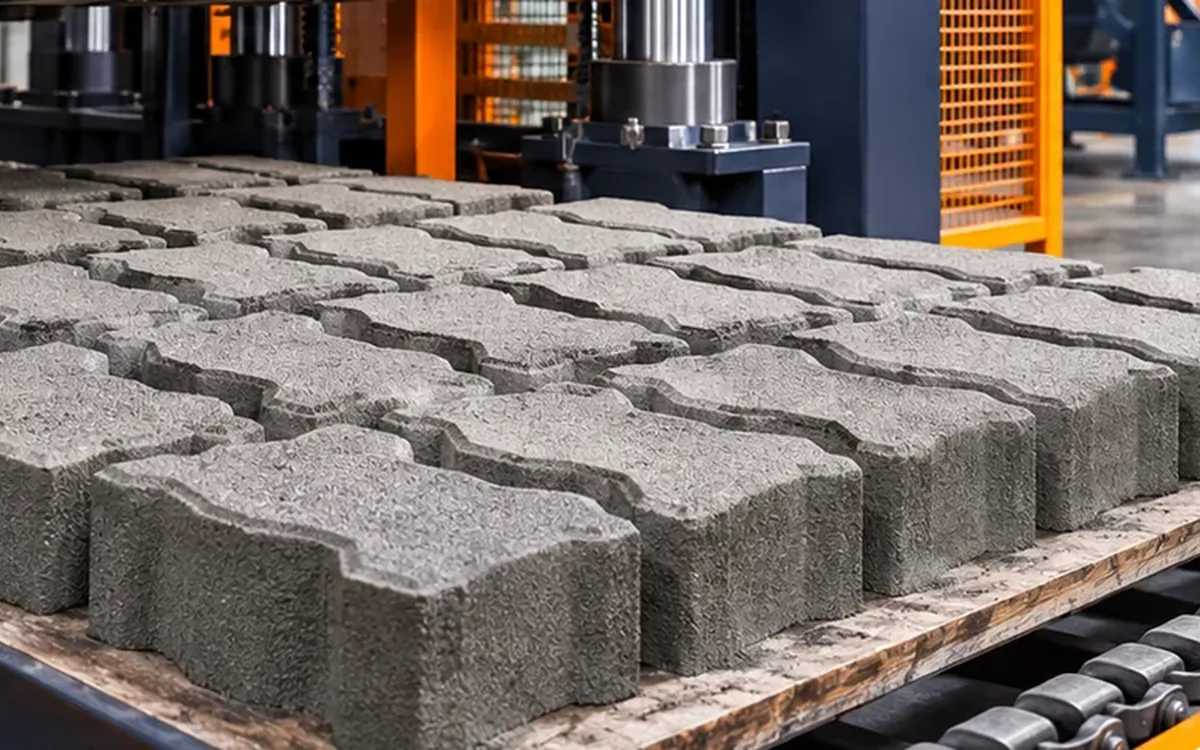
Paver production in Uzbekistan should be planned around the required hardscape units and how the facility intends to operate across changing seasonal conditions. Interlocking paving, decorative slabs and kerbstones may have different material, tooling and curing demands. A press capable of all three is useful only if the factory can preserve product quality and handle finished stock consistently. Define the commercially important formats before committing to a complicated automation package.
Select formats that fit the planned mould system
Collect drawings for the principal paver and edging profiles and check mould height, footprint and tamper compatibility. Decorative face layers can require additional feed and dosing equipment, while large kerbs create distinct lifting needs. Estimate how often recipes and moulds will change in an ordinary production week. The capacity calculation should include those operations and not depend on uninterrupted repetition of one easy product.
Control colour at the finished-product stage
Aggregate grading, cement colour and moisture can affect the appearance of paving products even when pigment quantities remain nominally constant. Plan storage and dosing controls for the intended seasonal conditions at the Uzbek site. Retain approved colour samples and compare products after appropriate curing. A commercial sample range should be supported by measured production consistency and relevant performance tests.
Protect curing capacity during colder operation
The suitable curing environment depends on the concrete mix, product geometry and actual factory temperatures. If the plant operates in cold weather, technical advisers should evaluate enclosure, temperature management and expected residence time. The press may need to operate below peak speed when storage positions are occupied longer. Model the required pallet population across both normal and constrained operating conditions.
Prevent damage between cubing and delivery
Pavers may develop adequate strength yet still suffer from rough transfer or unsuitable packing. Specify gripper contact surfaces, layer patterns and protective arrangements for decorative faces. Provide a staging area for completed packs and a clear forklift route through the warehouse. Label lots so quality issues can be associated with moulds, recipes and production dates.
Check full-line integration before acceptance
Request a control narrative showing how the press, curing station and dry-side equipment coordinate during faults. Identify power, compressed air and maintenance requirements for each module. Witness tests with the most demanding intended products and document unresolved issues. The paver line concepts and finished-product logistics guide help define the Uzbekistan project scope.