
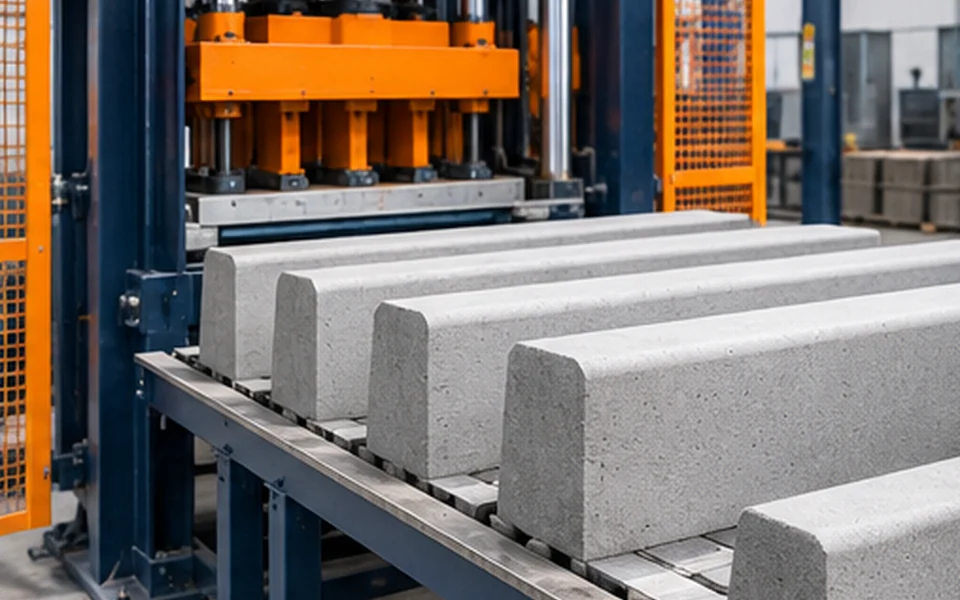
For a paver and kerbstone project in South Africa, the first design question is which mix of paving products the plant will actually ship. Interlocking paving, landscaping slabs and road-edge pieces involve different moulds, pack geometry and handling methods. A large quoted capacity matters only if the curing and dry-side systems can move the resulting products without breakage. Compare line concepts by the range and quality of finished output, not by press speed alone.
Segment the product range by production behaviour
Build a schedule that shows expected order sizes for standard pavers, decorative finishes and heavier products. Confirm which items require face-mix equipment and which can share a common base mixture. Kerbstones may introduce different lifting and stack patterns from small pavers, so their dry-side requirements should be reviewed separately. A machine that supports both families still needs a realistic mould-change and production plan.
Validate the visible surface and durability requirements
Surface colour, abrasion behaviour, edge condition and dimensions should be defined through the project specifications. Trial batches should use the materials intended for the South African production site. If several pigment colours are offered, record recipes and retain approved reference samples after consistent curing. A paver that looks attractive on the press pallet still needs relevant physical testing and a stable finishing process.
Treat storage and curing as a scheduling constraint
Model how pallets move from forming to curing and how the dry side draws them back into the production loop. The curing area should support different product residence times when necessary instead of forcing every item through one inflexible schedule. Check how the system identifies and safely handles incomplete pallets. Avoid building a press capacity that depends on perfect downstream operations every hour of the shift.
Design packs around distribution and handling
A useful cubing specification describes unit orientation, layer dimensions, grip method and required protective materials. It should also consider the transport vehicles and site forklifts intended for dispatch. Heavy kerb products can create different load-stability risks from smaller paving blocks. Demonstrate the final pack and loading workflow as part of acceptance rather than approving only the wet-side equipment.
Put process evidence into the purchase contract
Request a line layout, motor-load schedule, mould interface drawings, curing plan and documented tests for representative products. Suppliers should identify exclusions for civil work, dust extraction, software interfaces and maintenance tools. Review the production-line configurations and paver face-mix engineering guide to develop a complete South African manufacturing brief.