
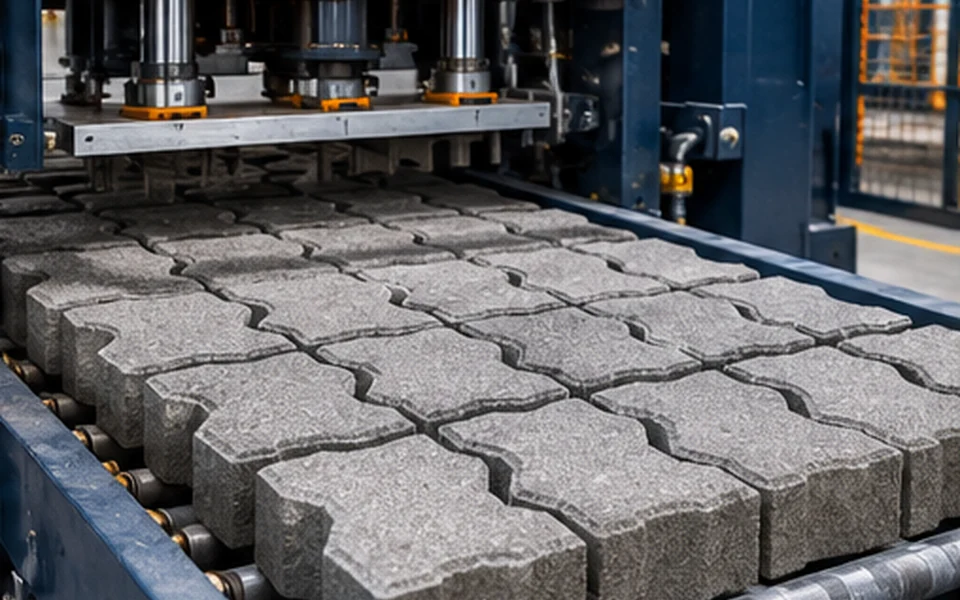
A Saudi Arabian paver line should be designed around the specified surface finish, unit geometry and production environment rather than a generic description of outdoor paving. Architectural colours, heavy kerbs and ordinary interlocking units can require very different handling and quality checks. Heat and material storage conditions must be considered alongside cycle time. A technically sound project brief connects raw-material control with curing, finished-pack protection and realistic order sizes.
Define appearance and use requirements separately
Record the paving unit's intended application, dimensions, colour and required physical characteristics before selecting moulds. Decorative face-mix units need additional material preparation and layer control that a simple grey paver may not require. The equipment offer should explain whether those systems are included or optional. A showroom sample is useful as a visual reference but cannot replace the relevant strength and durability tests.
Manage pigment and fine-material consistency
Colour can shift when cement, fine aggregates, moisture or mixing procedure changes. Store pigments and other sensitive materials under conditions suited to their supplier instructions, and keep recipe records by production batch. Assess finished shade under a defined lighting and curing condition rather than comparing freshly formed units to dry stock. A repeatable dosing and sample-approval process reduces unnecessary adjustment during normal production.
Engineer curing and protection for local conditions
Fresh products need to develop adequate handling strength before cubing or transport. Review how the proposed curing system controls moisture and temperature, particularly if parts of the production route are exposed to hot or dry air. A faster press may simply produce more pallets waiting for protected storage. Verify the pallet inventory and storage capacity using the actual expected schedule of paver products.
Plan transport without surface damage
Paving products may be packed in tight layers, but contact pressure and abrasion can damage architectural faces. Ask cuber suppliers to demonstrate handling of the intended profiles and layer patterns. Design an inspection station before wrapping and keep forklift routes separate from operator work areas. Finished-pack geometry should suit the planned transport and unloading equipment, not just the cuber's preferred arrangement.
Include operating cost in the supplier comparison
Compare face-mix cleaning time, pigment losses, mould-change effort, cooler and extraction requirements, and dry-side maintenance as part of the investment case. Insist that performance figures identify the exact product and test duration. Clarify responsibility for training, spare parts and recipe backups. The paver machine categories and colour-dosing guide are useful references for a Saudi-specific enquiry.