
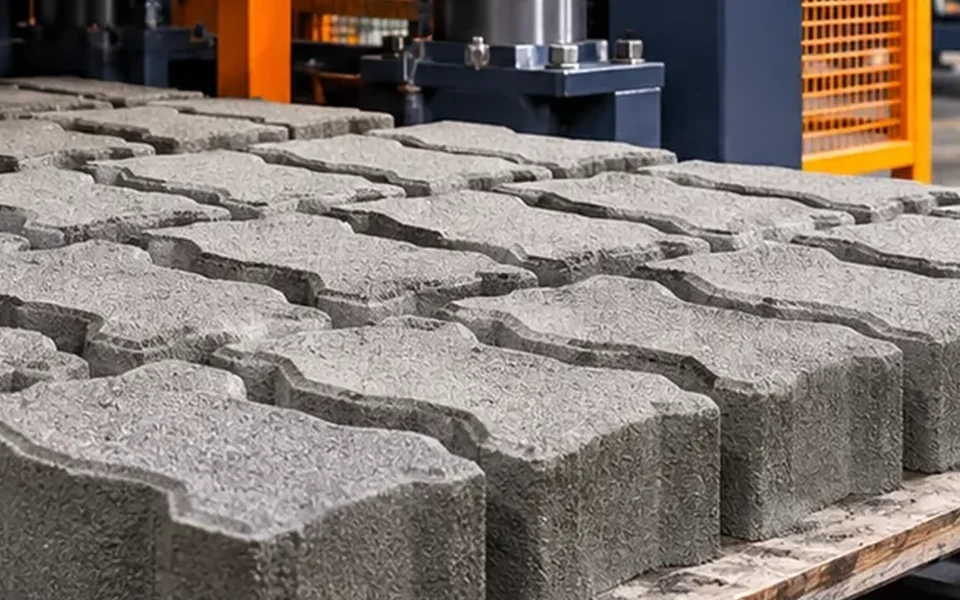
Planning a Kenya paver line requires a product strategy that separates routine interlocking paving from specialist hardscape pieces. Thickness, pattern, edge design and colour expectations can change how a line is configured. A producer serving multiple project types should assess whether frequent tooling changes will reduce the value of a very fast press. Record real order patterns and delivery distances so that equipment decisions reflect saleable output rather than a single demonstration cycle.
Choose product families with compatible operations
Prepare a matrix of paver dimensions, mould weights, layer requirements and expected batch lengths. Some configurations can share feeding and handling equipment comfortably, while unusual slabs or kerbs may require different transfer tooling. Review changeover steps with the supplier and identify which adjustments must be checked before restarting. A family of products that looks similar on paper may demand different curing or packaging procedures.
Link aggregate selection to surface performance
Investigate the grading and cleanliness of materials that will be used in the Kenyan factory. Fine aggregates influence colour, face finish and the ability to form sharp edges. A decorative face mix should be trialled using representative cement and pigments, with repeatability assessed after curing rather than only when freshly demoulded. Maintain reference samples for different colour batches and document raw-material changes when investigating shade variation.
Protect young units during movement
Fresh pavers can be damaged by sudden conveyor movement or poorly supported pallets. Verify transfer acceleration, pallet condition and the geometry of rack supports. Set curing residence according to validated product strength development; a fixed clock time without testing may be misleading when materials or conditions change. A smooth line must be assessed by damage rates as well as transfer speed.
Design the dry side for useful packs
Determine whether buyers need small mixed orders or consistent pallet quantities. Cubing grippers, interlayer protection and wrapping should suit the product surface and delivery conditions. Include an area for pack inspection before trucks are loaded, and plan traffic flow so forklifts do not repeatedly block production access. Good pallet identification supports traceability when customers report defects.
Compare line quotations with clear acceptance criteria
A complete bid should identify responsibilities for colour dosing, batching, pressing, curing, cubing, packing and training. Ask suppliers to demonstrate representative product formats and to define how rejects are counted during any performance test. The paver manufacturing systems and dry-side logistics guide can help structure a Kenya-focused specification.