
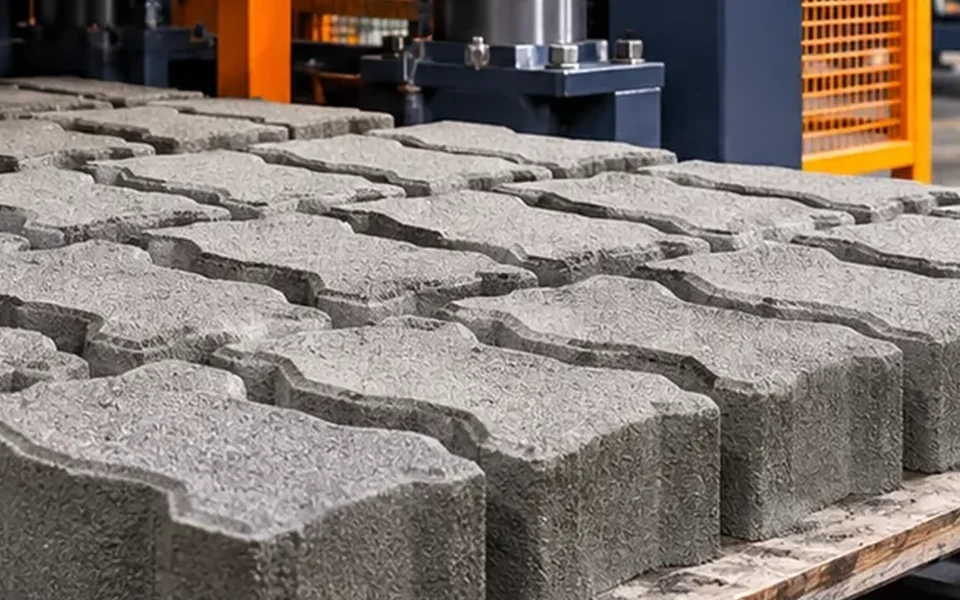
Selecting a paving-products line for Kazakhstan is as much a question of handling and curing as it is a question of forming speed. Paver thickness, colour, surface texture and finished-pack size determine which process stages are most demanding. Seasonal operating conditions and the chosen plant location should influence the facility's enclosure and storage strategy. A practical investment model compares saleable products over the intended production calendar rather than a best-case hourly press cycle.
Define the paving product families precisely
Separate common interlocking units from larger slabs and kerbstones in the technical brief. Verify which moulds share a pallet format and which require special transfer or cubing tools. Consider the commercial impact of short batches and repeated changeovers. A line that produces excellent standard grey pavers may need additional equipment for decorative or unusually large profiles.
Test mixes and surface finishes with local materials
The intended aggregate, cement and pigment sources should be represented during commissioning trials. Moisture and grading can change edge definition and surface colour, so batch records must support systematic corrections. Approve reference colours only after consistent curing conditions. Performance testing should follow the applicable product requirement instead of using colour or apparent density as a proxy for strength.
Match curing and warehouse design to the operating season
A curing plan must be based on demonstrated strength development under the actual factory conditions. In colder operation, enclosure and thermal arrangements may affect residence time, energy demand and required storage space. Calculate pallet inventory across the longest planned production cycle, including delays in the dry-side system. The press's advertised capacity does not override the limits of curing and finished-pack handling.
Make packaged stock resistant to handling damage
Define stack geometry, gripper contact and any interlayer material needed for the intended products. Consider safe forklift access and how packs will be secured for the planned transport conditions. Retain lot identification and inspection records for each completed shipment. A consistent packaging process reduces avoidable customer complaints about chipped corners or scuffed decorative faces.
Negotiate a complete line rather than scattered machinery
The commercial scope should identify the responsibility for batching, face feeding, press, curing, pallet handling, cubing, controls, utilities and training. Request acceptance evidence from representative product trials, including handling and packaging rather than only forming. Spare-part availability and service documentation should be evaluated for the chosen Kazakhstan factory. See the paving machinery section and manufacturing quality guide.