
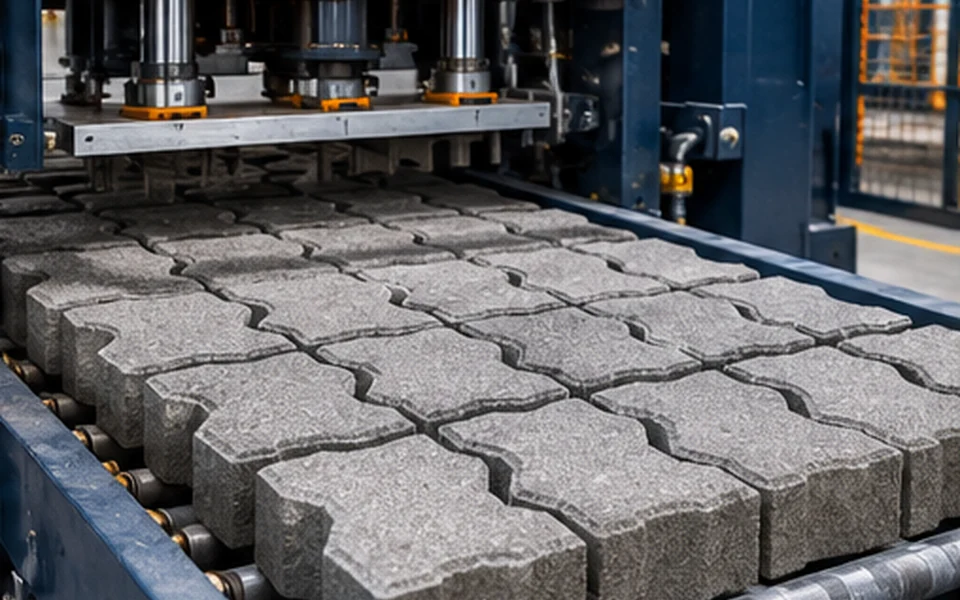
A paver manufacturing project in India should distinguish routine paving units from colour-finished landscape products and heavier edge pieces. The production portfolio may influence the required face-mix equipment, mould inventory and handling systems more than the size of the press itself. Start with the specific local product requirements and realistic order batches. Avoid assuming that a multi-product line can deliver peak capacity while changing shapes and colours frequently.
Map the main products and changeover demand
List intended interlocking patterns, thicknesses, kerbs and slab profiles with the quantities expected from each. Confirm the exact tool interfaces and transfer limitations. A thin decorative paver should not be evaluated using the same assumptions as a bulky standard block. Ask for a witnessed changeover between representative profiles and include associated cleaning and setup losses in the output plan.
Establish repeatable colour and texture control
Decorative paving faces can be sensitive to changes in aggregate grading, cement colour, moisture and pigment dosing. Evaluate ingredients from the proposed Indian sources before fixing the commercial colour range. Retain reference samples and compare products after a consistent curing period. A controlled approval procedure is more reliable than adjusting the pigment recipe each time a new raw-material delivery arrives.
Design for the full seasonal operating plan
Site drainage, covered storage, dust control and raw-material moisture measurement should reflect the conditions of the actual plant location. Do not rely on a uniform climate assumption for a project in a large country. Curing capacity should be validated for the selected recipes and product performance requirements. The planned pallet population must include positions tied up during the longest credible residence time and during dry-side delays.
Treat packaging as part of product quality
Check how finished units will be lifted, stacked, protected and transported to customers. Decorative surfaces can be damaged by grippers or direct contact even when their strength is acceptable. Establish pack geometry and any required interlayer protection before specifying the cuber. Include a final inspection and clear lot identification so defective shipments can be traced to production batches.
Compare the entire cost of an operational line
The supplier's scope should distinguish pressing, colour dosing, curing, handling, packaging, utilities and training. Request tests for finished products and an agreed procedure for resolving acceptance defects. Assess maintenance parts and process documentation as carefully as quoted capacity. The paver machinery range and production-quality guide help shape an Indian investment brief.