
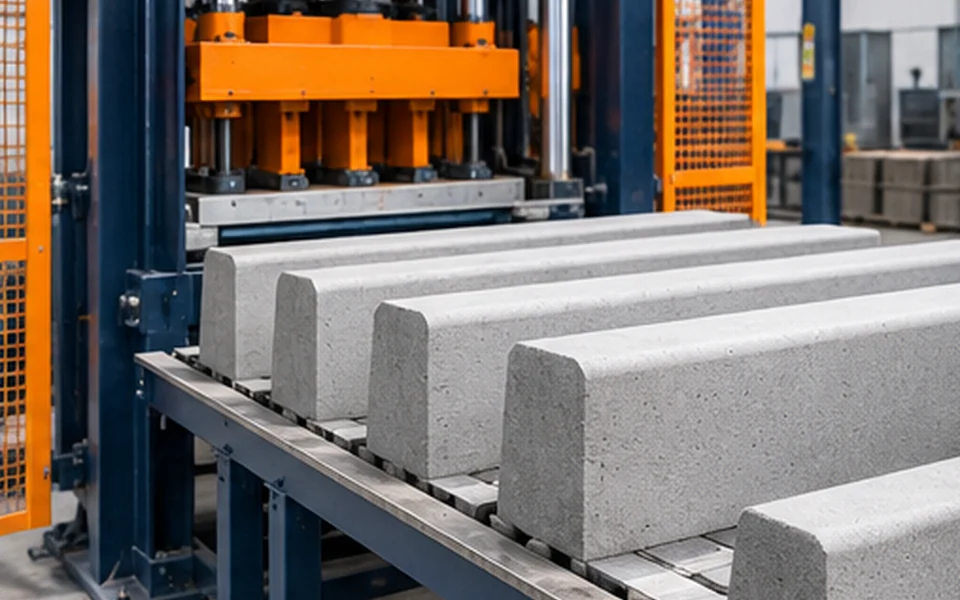
For an Egyptian paver plant, manufacturing strategy should begin with the intended hardscape applications and product forms. Interlocking paving stones, slabs and kerbstones each affect mould selection, curing storage and finished-pack design. If the production programme combines standard grey units with decorative colours, account for changeover losses before selecting machinery size. A workable line links the chosen product portfolio to the site's material and distribution conditions.
Classify the products by material and tooling needs
Create a schedule of paving unit dimensions, thicknesses, profiles and expected batch quantities. Identify which items need separate face-mix equipment and which share a common recipe. Verify that mould heights and tamper interfaces match the proposed press. Special edge profiles should be tested on the actual handling system rather than assumed compatible because they fit the forming pallet.
Qualify visual surface control at the selected site
Colour consistency depends on fine aggregate, cement, moisture and mixing procedure, not just pigment dosage. Use representative materials from the intended Egyptian plant supply chain and define a controlled comparison method for finished samples. A documented recipe library helps operators avoid shade drift between shifts. Review acceptance after a suitable curing period instead of adjusting by the appearance of freshly pressed pieces.
Calculate capacity with curing and changeovers
The press may be able to form more pallets than the curing system can store during a long run. Draw the circulation loop and calculate positions occupied by each main product. Include time for cleaning the face-mix system and changing moulds. The expected production plan should distinguish gross output from saleable units after defects and handling losses are removed.
Prepare safe dry-side transport and packaging
Decide how units will be stacked, gripped, strapped and loaded onto delivery vehicles. A pack of long kerbstones behaves differently from small interlocking pavers during lifting. Provide space for pack inspection and reject handling. The dry-side process should protect surface appearance while keeping forklifts separated from active production and personnel routes.
Compare complete supplier responsibilities
Request clear boundaries for batching, face feeding, moulds, curing, cubing, automation, electrical installation and operator training. Ask to see representative product trials with agreed acceptance measurements and written open-issue records. Confirm spare-part and diagnostic support for the complete line rather than only the press. The machinery directory and face-mix technical discussion can guide Egypt-specific supplier questions.