
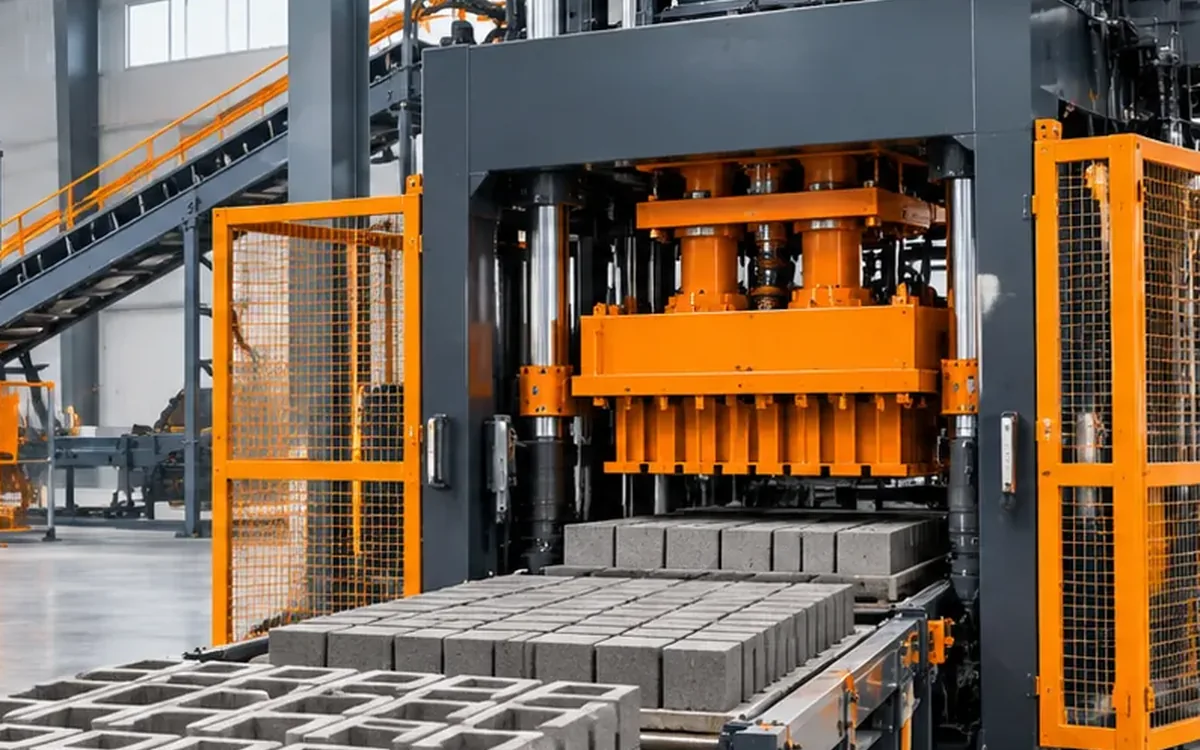
Selecting concrete block machinery for a United Arab Emirates factory requires a precise definition of the intended product and installation environment. Conditions for a coastal industrial plot can differ from an inland site, and that distinction can influence storage, corrosion protection, ventilation and logistics. The buyer should identify which masonry units will anchor regular production and which special profiles are occasional orders. Engineering the full flow around those priorities is more valuable than buying headline capacity with uncertain downstream support.
Make product compliance part of the specification
Collect drawings and acceptance criteria for the block types proposed for the UAE market. Check dimensional requirements, relevant testing methods and any project-specific approvals that the customer expects. Suppliers should explain how mould geometry, pallet format and forming settings align with those requirements. Do not treat a generic international compliance statement as proof that finished units will satisfy a particular contract.
Verify the suitability of local ingredients
Specify how the factory will qualify aggregates, cementitious materials and process water from its intended suppliers. Material grading and moisture determine mixture behaviour, while certain sources may need additional assessment for the chosen product application. Establish laboratory trials and an incoming-material record system before sustained production. This reduces the risk of relying on a mix developed with entirely different inputs.
Integrate thermal and environmental provisions
Electrical cabinets, hydraulic cooling and material storage should be evaluated against the conditions of the exact installation. Dust control and ventilation need coordinated airflow, not separately purchased components that interfere with one another. Where the site is exposed to marine conditions, confirm protective materials and service routines appropriate to the equipment. The vendor should specify operating limits and maintenance access in writing.
Keep plant logistics and service routes clear
Draw the aggregate delivery paths, production pallet circuit, curing area and finished-block dispatch lanes. Short distances are useful, but forklift crossings and blocked service doors can outweigh a compact footprint. Plan safe clearance for mould handling and equipment replacement. The output model should include time lost to product changes, quality checks and material replenishment rather than using only the fastest mechanical cycle.
Obtain a verifiable handover package
Request electrical and hydraulic drawings, machine settings, parts lists, operator procedures and a documented acceptance programme. Confirm which party installs the machinery, provides cranes or lifting equipment, and supplies utility connections. A witnessed trial with representative units is stronger evidence than a photo of a completed factory. Use the machinery overview and factory acceptance testing guide for UAE project preparation.