
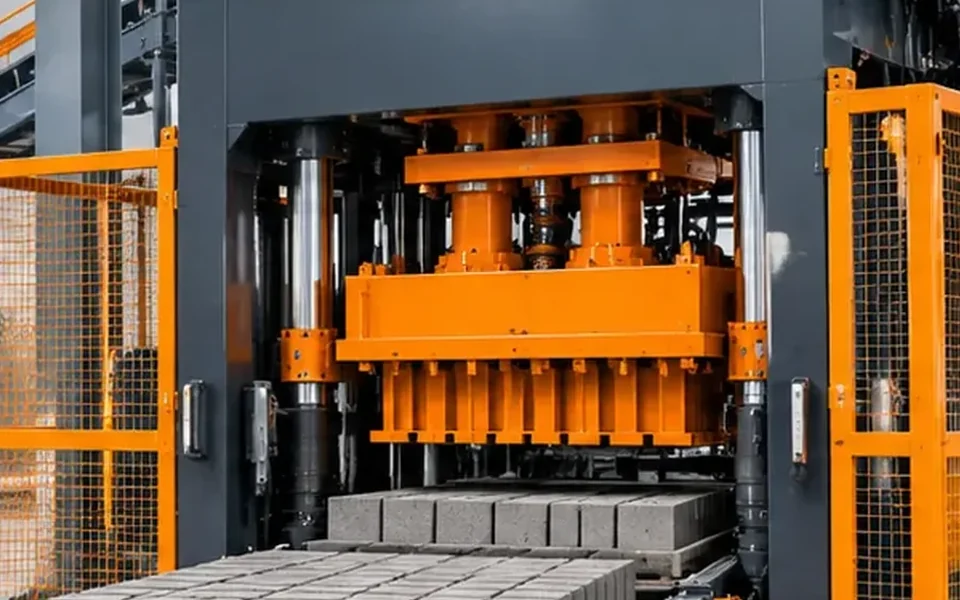
Equipment application
Fresh products are vulnerable to deformation and chipped edges during transfer. An elevator and conveyor arrangement should keep travel smooth while coordinating with the press cycle.
Transfer, storage and product protection
Pallet dimensions, loaded weight and rack slot spacing influence the design. The system must align mechanically and logically with the curing transfer method.
Operating the connected production process
Operational recovery also matters: a jammed pallet or missed position must have a safe clearing sequence that avoids additional damaged products.
Requesting a practical equipment specification
Share the pallet dimensions, product types and proposed curing rack design when planning the wet-side equipment.
- Production pallet dimensions and load
- Fresh vs cured product handling
- Rack and transfer compatibility
- Fault recovery and maintenance access
To plan fresh block elevator and transfer system within a complete plant, see the machinery category and the connected production line options.
Gentle handling immediately after demoulding
Fresh units may retain their shape on the pallet while still being vulnerable to shock and bending. The elevator and transfer mechanism must move loaded pallets smoothly, with reliable alignment and a predictable acceleration profile. Review the heaviest expected pallet and the weakest green product, not only the standard block used in a demonstration.
Interface with racks and curing transport
Check the loaded pallet envelope, transfer height, rack spacing and clearance for the equipment that enters and leaves curing storage. An elevator cannot resolve an undersized rack arrangement, and the line should have clear behaviour when storage is temporarily full. Buffer positions, sensors and fault-recovery access are important even for a simple transfer concept.
Inspection, wear and recovery
Moving chains, rollers, guides and limit switches require practical inspection access. Define where a jammed pallet can be removed safely and how operators restart without accidentally introducing gaps or collisions into the transfer sequence. A good proposal includes operating drawings and a maintenance list for the complete path used by a fresh pallet.
The green product determines handling limits
Freshly formed blocks may retain their shape yet still be vulnerable to impact and twisting. A wet-side elevator and transfer system should therefore be selected around the least stable product the factory will produce, not only its heaviest pallet. Review pallet stiffness, support points and how acceleration changes at every transfer. Even small repeated jolts can produce corner loss or cracks that become visible after curing. Observe the movement from the press through the elevator to the curing transfer device as one continuous route. The handling specification should include a clear tolerance for pallet dimensions and positioning so the system can guide each load without scraping or unexpected movement.
Elevator geometry and rack compatibility
The vertical travel, shelf pitch and loading level must match the selected curing rack and pallet format. Confirm the height envelope for the tallest formed unit plus its production pallet and any clearance required by transfer fingers or guides. An elevator may fit physically beside the press but still conflict with nearby columns, maintenance walkways or rack transport lanes. Include plans and sections rather than relying solely on a machine footprint. Check which parts remain accessible when the elevator is fully loaded. The design should let operators inspect a blocked transfer without reaching into an unsupported moving assembly, and it should have a defined safe position for maintenance.
Timing the interface with the forming machine
The transfer system needs to receive pallets at the forming machine's realistic sustained rhythm. Model the normal arrival interval, the elevator's travel cycle and the return movement after unloading. Where multiple pallets are accumulated, identify the maximum temporary buffer and the conditions that stop new product entering it. The objective is not to maximize elevator speed without regard to green-product stability. A short interruption downstream should produce a controlled upstream response rather than a collision or hurried manual intervention. Time the system with representative product heights and pallet loads, since the optimum movement profile may differ from one unit family to another.
Interlocks and controlled fault recovery
Ask for the logic that confirms a pallet is fully positioned before a lift begins, and what happens when a sensor is obscured or a rack is unavailable. Operators should see understandable alarms and be able to follow a safe recovery sequence after an interrupted transfer. Safety devices must cover routine running as well as cleaning and maintenance around the moving lift. Distinguish automatic cycling from supervised manual jog functions and define how unexpected restart is prevented. The interface with the press controller should communicate real readiness and fault states. A dependable elevator protects people and fresh products by making abnormal conditions predictable instead of forcing improvised recovery.
Wear points and inspection access
Guides, chains, lifting elements, bearings and positioning devices may experience different wear depending on load and cycle frequency. Request an inspection plan covering alignment, lubrication and mechanical fasteners that can be reached without dismantling major adjacent equipment. Pallet debris and spilled concrete should be collected before they accumulate on sensors or tracks. Check whether critical components can be replaced with the elevator in a safe service position and whether spare parts are identified in the documentation. A maintenance schedule should reflect the actual shifts and pallet weights. Early attention to misalignment prevents a minor mechanical issue from turning into repeated product damage.
Commissioning with actual pallets and curing racks
A factory acceptance trial should use the proposed pallet dimensions and representative block heights. Verify the full handoff from conveyor to elevator, movement through available positions and transfer into the rack system. Record cases where a pallet is slightly displaced and confirm the planned response without defeating safeguards. The site quotation should identify the press signals, rack pitch, room height, utility supply and scope of guiding hardware. If the line may later use a different pallet thickness or product height, ask which changes would be required. This prevents a nominally compatible elevator from becoming an expensive interface problem during installation.
System integration: A fresh-product elevator must accept the pallet geometry and mass while protecting the green concrete from vibration, twisting and sudden movement. Its practical duty is linked to press cycle variation and to how the curing area receives loaded pallets. The curing and cubing line explains the surrounding rack and dry-side transfer sequence. To define a useful transfer system, specify pallet dimensions, stack height, cycle demand and the location of maintenance access; those details determine whether the handling plan is genuinely workable.