
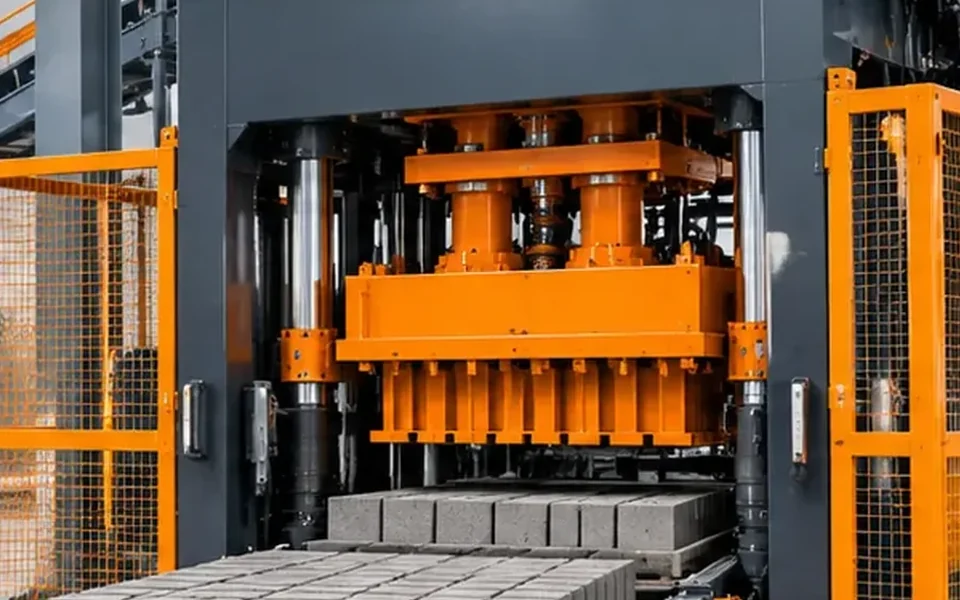
How automation level changes labour, investment and operating workflow.
The difference is not simply the number of buttons an operator presses. Automatic systems may coordinate filling, pressing, pallet transfer and downstream handling, while semi-automatic systems can rely on operator interventions at several points.
A comparison must list tasks, staffing requirements and safety arrangements for each configuration. Otherwise cycle-time comparisons hide the labour needed to keep a shift running.
Higher automation often supports consistency during long production runs, but it can also make product changes and maintenance procedures more complex. A smaller operation may value the ability to switch moulds without investing in a fully connected line.
Estimate annual demand and likely future products. The automation decision should follow those numbers rather than a fashionable description of a plant as fully automatic.
Include operator wages, training, spare parts, electricity, service tools and the risk of stoppages. A line that needs specialist intervention for routine faults may be more expensive to operate than expected.
Require clear recovery procedures and documentation for every automated station.
A phased plan can reserve room and interfaces for later pallet handling, cubing or additional recipe functions. This is useful only if the initial machinery arrangement supports safe expansion.
When evaluating automatic vs semi-automatic block machines, record the operating assumptions most relevant to the proposed product mix and factory conditions. Ask for a written scope of equipment, utilities and product quality verification.
For related equipment see concrete block machinery and plant configurations.
The words automatic and semi-automatic are not interchangeable definitions of a complete production line. One machine may automate mould feeding while another includes pallet transfer or downstream cubing. Write down each physical operation required during one cycle and assign it to an operator or mechanical subsystem. This helps reveal true staffing needs and the points where human handling constrains throughput.
A semi-automatic line can suit a focused product range when labour, space and handling are planned honestly. A fully automatic line can reduce repetitive handling but often requires more disciplined maintenance, fault diagnosis and consistent raw material supply. Compare training, spare parts and recovery from a stopped conveyor alongside the acquisition cost.
If staged automation is a possibility, ask whether the forming machine and plant controls can accept additional pallet feed, curing transfer or cubing equipment. Document interfaces before placing machinery in the building. A future automated conveyor may need space, power and a straight route that a compact manual arrangement did not originally reserve.
Map the tasks that remain manual in each proposal
Automatic and semi-automatic are useful commercial labels, but they do not identify every intervention an operator must make. Ask who feeds concrete, supplies empty production pallets, controls each forming cycle, moves green products, manages curing and stacks the finished units. A machine may have automatic pressing but still rely on manual pallet transfer and forklift scheduling. Another installation may coordinate batching and cubing while operators mainly handle supervision and quality checks. Write the sequence down from material preparation to dispatch and identify the number of staff actually required at each station. Also note the skills needed to handle mould changes, fault recovery and mechanical inspection. A meaningful comparison explains the labour workflow, not merely whether the control panel has an automatic button.
Evaluate the consequences of frequent product changes
A small plant often produces varied blocks, paving units and special orders in relatively short runs. In that environment, productive time may be lost to tooling change, feeder cleaning, colour change and first-article verification. High automation may make stable long runs efficient but does not automatically eliminate those changeovers. Compare how each proposal stores product recipes, returns to known settings and supports safe tooling access. A semi-automatic installation may be adequate when production is occasional and labour is available, while coordinated pallet handling can be critical for a factory operating long shifts. The decision should account for the actual order book and not only maximum theoretical cycle rates. Make the expected product mix part of supplier discussions before treating automation as a simple yes-or-no purchase.
Separate capital cost from operating exposure
The quoted equipment price is only the start of the comparison. Include building preparation, utility supply, batching compatibility, pallets, curing racks, lifting equipment, controls, installation labour and operator training. Semi-automatic lines may require more routine manual handling, which can influence staffing levels, physical workload and the risk of product damage. Automated systems can reduce repetitive handling but introduce additional sensors, drives, control dependencies and the need for trained maintenance personnel. Estimate the effect of these differences using realistic working hours and expected sales volumes, not optimistic production scenarios. Consider how quickly critical components can be replaced and whether the intended location has access to suitable technicians. A lower initial price may not represent lower lifetime cost if it creates bottlenecks, excessive product handling or unreliable downtime recovery.
Test fault recovery, training and safe operation
The operating sequence should be evaluated during abnormal conditions as well as during a smooth demonstration. Ask how the system handles a missing pallet, material shortage, blocked conveyor, full curing rack or interrupted cycle. Automatic devices should stop and recover predictably under documented conditions, while manual modes need protection against unsafe movement. Never assume that an emergency stop alone isolates stored hydraulic, mechanical or electrical energy for maintenance. Request instructions for isolation, restart and protective-device checks appropriate to the local legal requirements. Operators should be trained to understand machine states and reject defective product rather than simply repeating a reset command. A more automated factory is useful when the staff can interpret and maintain its behaviour after commissioning specialists leave.
Match the automation stage to a credible expansion plan
A staged plant can be sensible if the first installation deliberately reserves the interfaces and space needed for later upgrades. Confirm which additions are actually supported: wet-side transfer, automated curing storage, cubing, wrapping or extended recipe control may each require mechanical changes as well as software. Draw those future elements into the factory layout and assess whether the existing press and pallet footprint will remain suitable. Avoid paying for vague “upgrade-ready” promises without interface drawings and clear responsibilities. A small facility may choose to begin with operator-assisted handling while investing in a strong press and reliable mixer; another may need automatic transfer immediately because its intended labour model cannot support manual pallet movement. Review line integration as part of the decision. The appropriate automation level is the one the factory can operate today and extend with evidence tomorrow.