
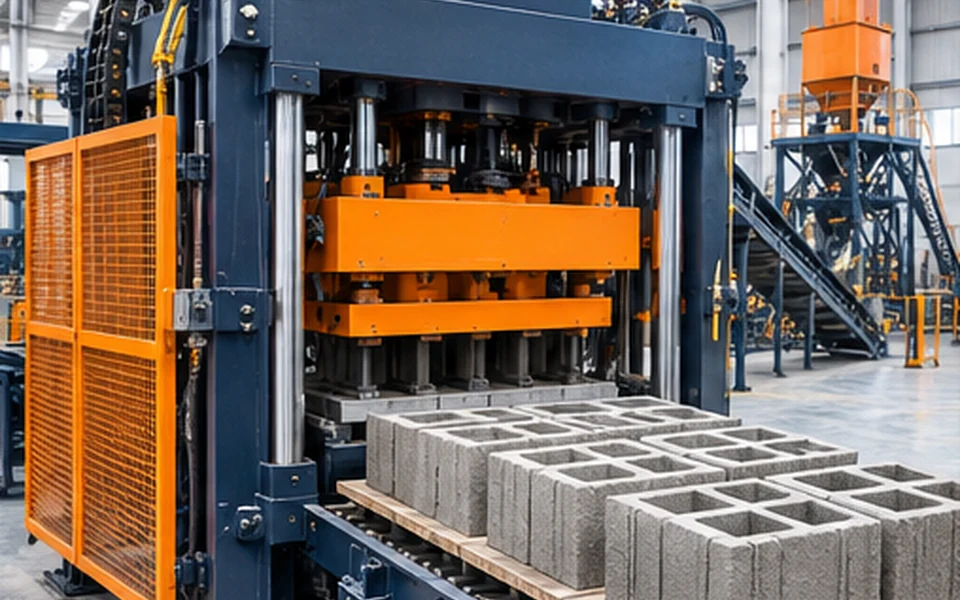
For concrete block manufacturing in Saudi Arabia, the plant brief should give serious attention to heat management, raw-material handling and a reliable operating schedule. Outdoor conditions can place different demands on aggregate storage, oil cooling and fresh-product protection than those seen in a temperate supplier workshop. Begin by defining the block sizes and quality requirements for the intended customers, then establish a realistic volume that the entire facility can maintain. A large press with inadequate supporting systems is not a high-capacity factory.
Develop a material and temperature-control plan
Review where aggregates, cement and process water will be stored and how the plant will monitor their changing condition. Hot material and variable sand moisture can affect the effective mixture condition even when target dosing values remain unchanged. A suitable batching and mixing design should permit measured corrections and repeatable records. Use representative materials and conditions during production trials rather than extrapolating from a supplier's unrelated test mixture.
Protect the compaction process against variability
A low-slump block must fill mould cavities evenly and retain its shape after demoulding. Verify whether the proposed vibration, tamper and feed-box settings can be managed for each major product family. Record variation by cavity, not only total pieces produced. In a multi-product factory, tooling changes and operator adjustments should be controlled through documented recipes so that output remains predictable between shifts.
Coordinate curing, cooling and material transfer
Fresh units need suitable curing conditions to develop their required properties, while harsh exposure can introduce unwanted moisture loss or surface defects. The facility plan should identify sheltered transfer routes, curing capacity and methods for maintaining a consistent environment. Temperature control may also be necessary for electrical or hydraulic components; the supplier should declare permissible operating conditions and cooling arrangements. These are separate engineering requirements and should not be left to a generic “desert-ready” sales description.
Specify access for dust control and maintenance
Aggregate bins, conveyors and dry material transfers deserve adequate containment and extraction provisions. Inspect how workers will safely reach filters, mixers and the vibration assembly for maintenance. A plant with frequently blocked cleaning routes is likely to experience avoidable production interruptions. Include a practical spare-parts inventory and documented safe isolation procedures in the commissioning package.
Require meaningful sustained-run evidence
The purchase specification should state the target unit geometry, batch assumptions, shift schedule and method for measuring conforming output. Ask how the supplier intends to demonstrate performance under conditions representative of the planned Saudi installation. Separate equipment price from utilities, cooling, civil work, training and acceptance tests. The block machine portfolio and factory utility planning guide help define that project scope.